
Uncategorized
HDB to Condo Furniture: Which Pieces Are Worth Bringing With You?
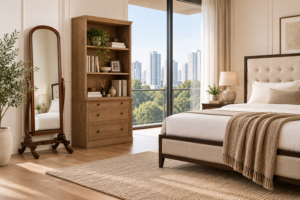
Moving from an HDB to a condominium does not mean you need to replace everything you own. In fact, HDB to condo furniture can often work surprisingly well when you rethink how each piece is used.
A larger home changes the way furniture feels. A dining table that once filled a compact dining area may suddenly have more room around it. Meanwhile, a small sofa or narrow cabinet that worked perfectly in an HDB may look undersized in a more spacious condo.
So, which pieces are actually worth bringing with you?
The answer is not simply about whether your furniture still fits. Quality, proportion, versatility and personal value all matter. For homeowners who have invested in solid wood furniture, moving can also be an opportunity to give well-made pieces a completely different setting.
Planning to sell your HDB? HDB advises homeowners to plan their next housing before committing to sell their current flat. You can find the official guidance on managing the sale of an HDB flat.
Choosing HDB to Condo Furniture: What Should You Keep?
Before you start shopping for your new home, divide your existing furniture into three simple categories.
Keep: Pieces that are well made, timeless and adaptable.
Replace: Pieces that were chosen mainly because they fit the limitations of your HDB.
Reposition: Furniture that can still work but may need to move to another room or be paired with different pieces.
This simple exercise can prevent you from spending unnecessarily.
More importantly, it allows your new home to retain some continuity. Not everything has to be brand new for a condo to feel different.
Why Solid Wood Furniture Is Worth Bringing to a Condo
Solid wood furniture is particularly worth reconsidering before you replace it.
A well-made wooden dining table, sideboard, cabinet or bed is not necessarily tied to one particular floor plan. Its role may change, but the furniture itself can continue to work.
This is one reason natural wood can be useful when moving between different types of Singapore homes. Home of Homes’ solid mahogany furniture, for example, is positioned around timeless proportions, natural character and pieces that can work across different interior styles.
A larger condo can actually give substantial furniture more breathing room.
Instead of looking crowded against several other pieces, a solid wood cabinet might become a focal point. A dining table can have more space around the chairs. A sideboard can finally have enough wall space to feel intentional.
The key is to reconsider the context, rather than assuming that the furniture itself needs to change.
1. Bring Your Solid Wood Dining Table
If there is one piece that is often worth taking from an HDB to a condo, it is the dining table.
Dining tables are not heavily dependent on a particular room layout. They can move with you and continue to serve the same purpose as your home changes.
A solid wood dining table can also become more visually balanced in a larger dining area.
In an HDB, you may have needed to position the table close to the living room, kitchen or a wall simply to save space. A condo may give you the opportunity to centre it properly and create more room around the chairs.
Before deciding to replace it, consider:
- Is the table still structurally sound?
- Do you still like its design?
- Does the size suit your new dining area?
- Can it accommodate your current household?
- Does the wood tone work with your new flooring?
- Can you style it with different dining chairs?
If the answers are mostly yes, there may be little reason to replace it.
2. Keep a Sideboard That Has Character
A sideboard can become even more useful after moving.
In an HDB, it may have been primarily a storage solution. In a larger condo, it can become a design feature as well.
Place a solid wood sideboard against a generous wall and style it with artwork, a mirror, table lamps or a few carefully selected objects.
It can then serve several purposes at once:
- Store dining essentials
- Anchor a dining area
- Display artwork
- Define an open-plan space
- Provide additional surface space
- Add warmth to a contemporary interior
Home of Homes also recommends using substantial wood pieces selectively, allowing a statement sideboard or cabinet to have enough surrounding space rather than placing several heavy pieces together.
That principle becomes particularly useful when moving into a larger property.
3. Bring Furniture That Has Personal Meaning
Not every furniture decision needs to be purely practical.
Some pieces are worth bringing because they already feel like part of your home.
Perhaps it is the dining table where your family has celebrated birthdays. Maybe it is a cabinet you bought when you first furnished your HDB. It could even be a solid wood coffee table that has developed small marks and changes in colour over the years.
These pieces bring something new furniture cannot immediately create: familiarity.
A larger condo does not have to be filled entirely with newly purchased furniture.
Instead, a few established pieces can give the interior a sense of personality.
This works especially well when traditional furniture is placed alongside contemporary pieces.
A carved mahogany cabinet, for example, can look surprisingly modern when paired with a clean-lined sofa, neutral upholstery and contemporary lighting.
4. Your Solid Wood Bed May Still Have a Place
Moving into a condo may give you a larger bedroom, but that does not automatically mean you need a new bed.
A well-made solid wood bed can remain relevant even when the room around it changes.
Instead of replacing the bed, consider changing the furniture surrounding it.
A larger bedroom might allow you to add:
- Matching bedside tables
- A larger rug
- A reading chair
- A bedroom bench
- More substantial bedside lamps
- Artwork
- A separate dressing area
The same bed can therefore feel completely different.
This is one of the advantages of choosing furniture with timeless proportions rather than pieces designed around one specific room size.
5. Display Cabinets Can Work Even Better in a Larger Home
Display cabinets are another piece of HDB to condo furniture that deserves a second look before you decide to replace it.
In a smaller home, a large cabinet can sometimes feel visually dominant.
In a larger condo, however, that same cabinet may finally have enough space to become a feature.
Instead of squeezing it between other furniture, give it some breathing room.
Leave part of the surrounding wall visible. Keep the floor around it relatively clear. Then allow the cabinet’s shape, wood grain and contents to create the visual interest.
This is particularly effective with carved or detailed solid wood furniture.
The larger room gives the craftsmanship somewhere to breathe.
Which HDB Furniture Should You Replace?
Not every piece deserves to make the move.
Some furniture was purchased specifically to solve a space problem.
A small sofa, for example, might have been ideal for a compact HDB living room but look lost in a much larger condo.
Similarly, several small storage units may have been necessary when space was limited. In a larger home, replacing them with one substantial sideboard or cabinet could create a cleaner interior.
Consider replacing furniture when:
- It feels too small for the new room.
- It was bought as a temporary solution.
- It no longer suits your lifestyle.
- Its condition has deteriorated.
- Its style clashes with the new home.
- You have better storage options now.
- It cannot be repositioned effectively.
The goal is not to keep everything.
The goal is to keep the right things.
How to Make HDB Furniture Work in a Larger Condo
One of the biggest mistakes homeowners make after moving is recreating the exact same furniture arrangement.
Your new home has different proportions, so your furniture should have a new composition.
Start by identifying the room’s main focal point.
Then position the largest pieces around it.
For example:
Living room
Sofa → coffee table → accent chair → sideboard
Dining room
Dining table → dining chairs → sideboard → display cabinet
Bedroom
Bed → bedside tables → rug → accent chair
You can also use furniture to define different areas without adding walls.
This is particularly useful in larger open-plan condos, where living, dining and kitchen areas may share one continuous space.
Home of Homes’ guidance on open-plan interiors similarly recommends using furniture with a consistent visual language rather than making every piece match exactly.
Don’t Assume a Bigger Home Needs Bigger Furniture Everywhere
A larger condo does not mean every furniture piece needs to be oversized.
This is an important distinction.
Your dining table may need more visual presence, but your side tables may not.
Your sofa may need to be larger, while your existing coffee table could remain.
Your bedroom may accommodate a larger rug, but your current bed could still be perfectly proportioned.
Instead of automatically upsizing everything, look at each room individually.
Ask:
Does this piece feel too small, too large or appropriately proportioned?
That question is more useful than simply asking whether it is “big enough.”
Give Your Furniture More Breathing Room
One of the biggest benefits of moving from an HDB to a condo is the possibility of creating more negative space.
Use it.
A substantial piece of furniture can look more elegant when it is surrounded by empty space.
A sideboard does not need another cabinet beside it.
A dining table does not need to fill the entire dining area.
A display cabinet does not need to sit directly beside a second tall cabinet.
Home of Homes’ furniture guidance similarly highlights the importance of negative space and distributing visually heavy pieces rather than concentrating them in one area.
Sometimes, leaving a wall partially empty makes the furniture look more intentional.
Mix Existing Furniture With New Pieces
You do not need your old furniture and new furniture to match perfectly.
In fact, mixing them can create a more personal interior.
Imagine:
Existing: solid mahogany dining table
New: contemporary upholstered dining chairs
Existing: wooden sideboard
New: modern pendant light
New: contemporary artwork
The result feels collected rather than overly coordinated.
This approach works particularly well when working with natural wood.
You can combine rich mahogany with lighter wood, neutral upholstery, stone, glass or metal. Home of Homes’ recent guide on mixing mahogany and light wood recommends using contrast, repetition and neutral materials to connect different wood tones.
Don’t Be Afraid to Move Furniture to Another Room
A piece does not have to return to the same room simply because it lived there before.
This can be one of the easiest ways to make old furniture feel new.
A sideboard that previously lived in your dining area could become a console in the entryway.
A cabinet from the living room could move into a study.
A small armchair could become a reading chair in the bedroom.
A console could become a dressing table.
This is where versatile furniture becomes particularly valuable.
The more adaptable the piece, the more likely it is to remain useful as your home changes.
What About Furniture That Feels Too Small?
Don’t immediately discard it.
First, see whether the surrounding composition can change.
A small console may look lost against a large wall. Pairing it with artwork or a mirror can give it more visual presence.
A small coffee table may work better when combined with a larger rug and appropriately scaled seating.
A compact cabinet could become a useful accent piece rather than the room’s main storage solution.
However, if the scale still feels wrong after rearranging the room, that may be a sign that the piece has reached the end of its role.
What About Furniture That Feels Too Heavy?
This is where styling becomes important.
Dark or substantial furniture does not automatically make a room feel smaller.
The surrounding materials make a significant difference.
Balance heavier wood furniture with:
- Cream upholstery
- Warm white walls
- Light rugs
- Linen curtains
- Glass
- Greenery
- Pale wood
- Natural textures
A dark mahogany sideboard against a warm neutral wall can feel elegant rather than heavy.
Likewise, a solid wood dining table can feel lighter when surrounded by upholstered chairs and plenty of open floor space.
A Simple Test Before You Replace Anything
Before buying new furniture, try this five-question test.
1. Is it well made?
Look beyond appearance. Consider the construction, condition and overall quality.
2. Do you still like it?
If you genuinely enjoy the piece, that matters.
3. Can it work somewhere else?
A change of room may solve the problem.
4. Can it work with your new interior?
Think about wood tones, upholstery, flooring and lighting.
5. Will you still want it several years from now?
This is especially important for larger furniture purchases.
If a piece passes most of these questions, it may deserve another home in your new home.
The Best HDB to Condo Furniture Is Not Always the Newest
Moving from an HDB to a condo can feel like a reason to start over.
But sometimes, the better approach is to edit rather than replace.
Keep the dining table that has good proportions.
Keep the sideboard that has beautiful craftsmanship.
Keep the cabinet that gives the room character.
Replace the sofa that is genuinely too small.
Remove the temporary storage that no longer serves a purpose.
Then introduce new pieces where the larger home actually needs them.
This approach creates a more layered interior and can also make your new home feel connected to the life you have already built.
Think About Your Next Home Before Buying Furniture
If you are currently furnishing an HDB but expect to move into a larger property eventually, consider adaptability before making major furniture purchases.
Ask yourself:
Would this piece still work in a larger room?
Could it move into another room?
Would I still like this design in five or ten years?
Can it work with different flooring and wall colours?
Is the construction good enough to keep long term?
These questions shift the focus from buying furniture for one room to choosing furniture that can move through different stages of life.
Why Solid Wood Can Be a Long-Term Furniture Choice
Solid wood furniture has a particular advantage when your home changes: it can remain visually relevant even when the surrounding interior evolves.
A dining table does not have to belong to one specific style of home.
A sideboard can move from an HDB dining room into a condo living area.
A wooden cabinet can transition from a traditional interior into a more contemporary one.
That flexibility comes partly from the natural character of timber.
Rich wood can be paired with contemporary upholstery. Traditional detailing can be balanced with clean-lined furniture. Dark wood can be softened with cream, linen and light flooring.
The furniture does not necessarily need to change simply because the architecture has.
Moving From HDB to Condo? Start With What You Already Own
The most important part of moving is not deciding what to buy.
It is deciding what deserves to come with you.
Some furniture has already proven itself through years of everyday use. Some pieces have become part of your family’s routines. Others may have simply been practical solutions for a smaller floor plan.
Separate the two.
Bring the furniture that has quality, character and flexibility.
Replace what no longer works.
Then allow your new home to evolve around the pieces you have chosen to keep.
For homeowners considering HDB to condo furniture, this approach can result in a home that feels more personal, rather than one furnished entirely from scratch.
Create a Home That Can Move With You
A move to a condo is often a new chapter, but that does not mean everything from your previous home has to disappear.
The right furniture can move with you.
A solid wood dining table can become the centre of a larger dining room. A sideboard can finally have enough wall space to stand on its own. A display cabinet can become a focal point instead of a storage necessity.
Meanwhile, new furniture can fill the gaps where your previous pieces no longer suit the scale or function of the room.
At Home of Homes, the focus is on furniture that combines character, proportion and lasting design. From solid wood dining tables and sideboards to display cabinets and British Colonial-inspired pieces, the right furniture can adapt to different interiors rather than being limited to one particular floor plan.
So before you replace everything, take another look at what you already own.
Your next home may have more space, but that doesn’t mean your old furniture has outgrown you.
Sometimes, it simply needs a new room to come alive again.