
Uncategorized
Storage Furniture for Singapore Homes: How Much Do You Need?
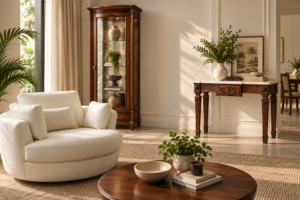
Storage is one of those things you only notice when you do not have enough of it.
A home can have beautiful furniture, carefully chosen colours and a thoughtful layout, yet still feel cluttered when everyday items have nowhere to go. On the other hand, adding too many cabinets and shelves can make a Singapore home feel crowded and reduce the space you actually enjoy living in.
The answer is not simply to buy more storage furniture.
Instead, the goal is to understand what you need to store, where you need it and which furniture can handle those items without overwhelming the room.
For HDB flats, condominiums and other compact Singapore homes, this balance is particularly important. The right sideboard, cabinet, console or display unit can provide useful storage while also contributing to the character of the interior.
So, how much storage do you really need?
The answer starts with your daily habits.
Why Storage Furniture Matters in a Singapore Home
Storage furniture has two jobs.
First, it needs to keep your belongings organised. Second, it needs to work as part of the room’s overall design.
That second point is easy to overlook.
A cabinet is not just a place to put things away. Its height, width, colour, material and visual weight can affect how spacious the room feels.
For example, a long wooden sideboard can provide useful dining-room storage while also creating a focal point. A tall display cabinet can make use of vertical space without taking up the same floor area as several low cabinets.
Therefore, choosing storage should happen alongside your furniture planning rather than as an afterthought.
Start by Counting What You Actually Need to Store
Before buying storage furniture, take a quick inventory of the items currently sitting outside cupboards and drawers.
Look around your:
- Living room
- Dining area
- Bedroom
- Entryway
- Home office
- Kitchen
- Household shelter
- Bathrooms
Then group your belongings by how often you use them.
Everyday items
These need to be easy to reach.
Examples include:
- Remote controls
- Chargers
- Books
- Tableware
- Bags
- Everyday documents
- Frequently used electronics
Occasional items
These can be stored further away.
Examples include:
- Servingware
- Guest bedding
- Seasonal decorations
- Special occasion tableware
- Extra linens
Decorative items
These do not necessarily need closed storage.
Books, ceramics, artwork and collected objects can be displayed instead.
This simple exercise can reveal something important: not everything needs a cabinet.
Some belongings need drawers. Others need shelves. Some need concealed storage, while others can become part of the room’s styling.
Think About Storage by Room
Rather than asking, “How much storage does my home need?”, ask:
“How much storage does each room need?”
This makes the decision much easier.
Living Room Storage
The living room usually needs storage for everyday objects rather than large quantities of belongings.
Think about:
- Books
- Media accessories
- Board games
- Cables
- Documents
- Decorative objects
- Small electronics
A low sideboard can be useful here because it provides concealed storage without visually dominating the room.
A coffee table with a lower shelf can also provide a small amount of accessible storage without adding another large piece.
For smaller living rooms, proportion is particularly important. Home of Homes’ guide to furniture sizing recommends considering the room first, then selecting furniture that leaves enough space for comfortable movement.
How Much Storage Does a Dining Room Need?
Dining rooms are often overlooked when planning storage.
However, this is one of the areas where a well-designed piece can make everyday life easier.
Consider what you actually use around the dining table:
- Plates
- Serving bowls
- Glassware
- Cutlery
- Table linens
- Napkins
- Candles
- Entertaining accessories
A sideboard can be ideal because it keeps these items close to the dining area without requiring additional kitchen cabinetry.
It can also become a design feature.
A beautifully crafted wooden sideboard can provide concealed storage below while giving you a surface for artwork, lamps, ceramics or flowers.
This is a good example of storage furniture doing more than one job.
Sideboard or Cabinet: Which Do You Need?
The answer depends on the type of storage you need.
A sideboard works well when you need horizontal storage and a surface for styling.
A display cabinet is better when you want to combine storage with visible display.
A closed cabinet is useful when you want to hide clutter completely.
A console works well for smaller items and entryway essentials.
Rather than choosing based only on appearance, think about what will actually go inside the furniture.
If most of your belongings are visually messy, closed doors may be more useful.
If you have books, ceramics or collections that you enjoy seeing, a combination of open and closed storage may be better.
Do You Really Need Floor-to-Ceiling Storage?
Not always.
Built-in storage can be extremely useful, but it is not automatically the best solution for every room.
Large built-in cabinets can take up substantial visual space and can make a room feel more permanent.
Freestanding furniture offers another option.
A well-proportioned cabinet or sideboard can provide storage while allowing you to change the layout later.
This flexibility can be valuable if your needs change over time.
For example, a couple moving into their first home may eventually need additional storage after having children. A freestanding cabinet can be moved or repurposed more easily than a fixed solution.
Use Vertical Storage When Floor Space Is Limited
When a room is small, look upwards.
Vertical storage can make better use of limited floor space because it increases storage capacity without spreading furniture across the room.
A tall display cabinet, bookcase or narrow cupboard can work particularly well.
However, there is an important balance to consider.
A tall dark cabinet can feel visually heavy if it is placed in a small room with little natural light. In that situation, lighter walls, open shelving or glass doors can help.
Home of Homes’ furniture guidance similarly recommends considering vertical storage for small living rooms while avoiding filling every shelf, as negative space helps the room feel less visually heavy.
Don’t Fill Every Wall With Storage
This is one of the most common mistakes.
When homeowners feel that they do not have enough storage, the natural reaction is to use every available wall.
The result can be practical but visually overwhelming.
Instead, leave some walls intentionally empty.
Negative space helps furniture stand out and gives the room a sense of breathing room.
For example, one substantial sideboard can often look more elegant than three smaller cabinets scattered around the room.
The same principle applies to display shelves.
You do not need to fill every shelf simply because it is available.
Choose Closed Storage for Visual Clutter
Some things are simply better hidden.
Cables, paperwork, miscellaneous household items and rarely used objects can quickly make a room look untidy.
For these belongings, closed storage is usually the better choice.
Drawers and cabinet doors create a cleaner visual surface, which is especially useful in open-plan homes where the living and dining areas are visible from one another.
This is also where well-designed furniture can make a difference.
Instead of adding storage boxes throughout the room, use furniture that naturally integrates storage into the design.
Use Open Storage for Things Worth Displaying
Not everything needs to disappear behind a door.
Books, ceramics, framed photographs and decorative objects can add personality to a home.
A glass-fronted cabinet or open shelving can therefore provide both storage and display.
The key is restraint.
Choose a few pieces that you genuinely like rather than filling every available surface.
A combination of approximately 70% concealed storage and 30% display can be a useful starting point for a room where you want the interior to feel organised but still personal.
It is not a strict design rule. Your actual ratio should depend on what you own.
Think About Furniture That Serves Two Purposes
The best storage furniture often does more than one thing.
A sideboard can provide storage and act as a styling surface.
A display cabinet can store tableware while showcasing ceramics.
A console can organise keys and small belongings while defining an entryway.
A coffee table with a lower shelf can provide a place for books without requiring another cabinet.
This approach is particularly useful in smaller Singapore homes because every piece of furniture has an opportunity to contribute more than one function.
Choose Storage Based on What You Own
Storage should follow your belongings, not the other way around.
If you own many books, shelves make sense.
If you collect tableware, a dining cabinet may be more appropriate.
If you have large household items, deep cupboards may be necessary.
If you mainly struggle with small everyday objects, drawers could be more useful than a large cabinet.
This sounds obvious, but it is surprisingly easy to buy attractive furniture that does not actually solve the storage problem.
Before purchasing anything, ask:
What exactly will I put inside this?
If you cannot answer the question, you may not need the piece.
Consider Furniture Depth, Not Just Width
A cabinet can look reasonably sized from the front but still take up too much space once it is in the room.
Depth matters.
This is especially important in:
- Narrow living rooms
- HDB corridors
- Dining areas
- Entryways
- Bedrooms
A deep cabinet can reduce walking space and make the room feel more crowded.
Therefore, measure the furniture in three dimensions before buying it.
Do not only ask whether it will fit against the wall.
Ask whether you can still comfortably walk around it.
Leave Enough Space Around Storage Furniture
Storage should never make everyday movement difficult.
Think about the paths between:
- Sofa and cabinet
- Dining chairs and sideboard
- Bed and wardrobe
- Entryway and console
- Kitchen and dining area
Cabinet doors and drawers also need enough room to open comfortably.
This is particularly important in dining areas. A sideboard may fit perfectly against the wall, but if its doors cannot open without hitting a dining chair, the furniture is not functioning properly.
In other words, storage capacity means very little if the furniture is difficult to use.
Don’t Forget the Bedroom
Bedrooms often need more storage than homeowners initially expect.
Clothing is only one part of the problem.
You may also need space for:
- Bed linens
- Towels
- Bags
- Shoes
- Accessories
- Books
- Personal documents
- Seasonal belongings
A combination of wardrobe storage and smaller furniture can help distribute the load.
A bedside table, for example, can keep everyday items close without requiring a large cabinet.
Meanwhile, a chest of drawers can handle smaller belongings that are difficult to organise inside a large wardrobe.
Make Storage Match the Style of Your Home
Storage should feel like part of the furniture collection rather than an afterthought.
This becomes particularly important when choosing solid wood furniture.
A dark mahogany sideboard, for example, creates a very different atmosphere from a glossy white built-in cabinet.
Neither is automatically better.
The choice depends on the overall interior.
If your home has warm flooring, neutral upholstery and natural materials, solid wood storage can add depth and continuity.
Home of Homes’ collections include solid wood furniture in styles such as British Colonial, New Toulon, French Contemporary and Mid Century, making storage pieces part of a broader furniture aesthetic rather than purely functional additions.
Should Storage Furniture Match?
Not necessarily.
A common misconception is that every cabinet in a home should come from the same furniture collection.
A more considered approach is to create visual relationships.
For example, you could repeat:
- Similar wood tones
- Similar hardware finishes
- Similar proportions
- Similar detailing
- Similar colour palettes
The pieces do not need to be identical.
In fact, mixing complementary furniture can make a home feel more collected and personal.
How Much Storage Is Enough?
There is no universal number of cabinets that every Singapore home needs.
Instead, you have enough storage when:
- Everyday items have an obvious place.
- Frequently used belongings are easy to access.
- Clutter can be put away quickly.
- Important items are not hidden so well that you forget where they are.
- Storage furniture does not obstruct movement.
- The room still has enough visual breathing space.
That final point is important.
More storage does not automatically mean a better-organised home.
The goal is to create the right amount of storage for the way you actually live.
A Simple Storage Planning Method
If you are furnishing a new home, try this five-step process.
Step 1: List what needs storing
Walk through each room and write down the items that currently have no permanent home.
Step 2: Separate everyday and occasional items
Everyday belongings should be easiest to reach.
Occasional items can be placed in less accessible storage.
Step 3: Decide between open and closed storage
Hide visual clutter.
Display things that add personality.
Step 4: Measure the available space
Check width, depth, height and walking clearance.
Step 5: Choose furniture that fits the room
Only then should you start comparing sideboards, cabinets, consoles, display units and other storage furniture.
This process can prevent one of the most expensive furniture mistakes: buying something beautiful that does not actually work in your home.
Storage Furniture Should Make Your Home Feel Better, Not Fuller
The best storage is not necessarily the furniture with the largest capacity.
It is the piece that fits naturally into your room and makes everyday life easier.
A well-designed sideboard can remove dining-room clutter. A display cabinet can organise belongings while adding character. A carefully proportioned cabinet can make use of vertical space without taking over the room.
Most importantly, good storage should support the way you live.
For Singapore homes, where space often needs to serve several purposes at once, furniture needs to be both practical and considered.
At Home of Homes, storage pieces are designed to be part of the wider interior rather than simply functional boxes. From classic solid wood sideboards to display cabinets and dining furniture, the right piece can give your home additional storage while adding warmth, craftsmanship and visual character.
Explore the furniture collections at:
https://www.homeofhomes.com.sg/