
Uncategorized
How to Make Dark Wood Furniture Work in a Small Singapore Home
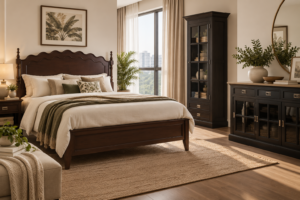
Dark wood furniture can make a small home feel heavy — but it can also make the space feel warmer, more elegant and more thoughtfully designed. The difference usually comes down to how the furniture is balanced with the rest of the room.
In Singapore homes, where HDB flats and condominiums often have compact living areas, choosing furniture with the right visual weight is especially important. A large dark cabinet, deep sofa or oversized dining table can quickly dominate the room. However, when dark wood is paired with lighter colours, natural textures and enough breathing space, it can become a beautiful focal point.
This is why dark wood furniture remains relevant for homeowners who want a home that feels timeless rather than overly dependent on current interior trends.
At Home of Homes, rich wood tones are particularly associated with the British Colonial aesthetic, where darker woods are balanced with lighter upholstery, natural textures and tropical-inspired elements.
Why Dark Wood Furniture Can Work in a Small Home
The idea that small rooms should only use light-coloured furniture is understandable, but it is not a strict rule.
Dark wood can actually give a room more definition. Instead of making every surface the same light shade, a darker piece introduces contrast and creates a visual anchor.
For example, a dark wooden sideboard against a warm white wall can look more intentional than a room filled entirely with pale furniture. Similarly, a dark dining table can visually define the dining area within an open-plan living and dining space.
The key is balance rather than avoidance.
When dark furniture is surrounded by lighter walls, soft upholstery and natural materials, the contrast prevents the room from feeling visually flat.
Home of Homes’ own guidance on combining mahogany with lighter wood recommends using contrast rather than trying to make every element in the room equally dark.
1. Start With One Statement Piece
One of the easiest ways to introduce dark wood furniture into a small Singapore home is to start with a single substantial piece.
Instead of buying a dark sofa, dining table, cabinet, coffee table and sideboard at the same time, choose one piece that you want to become the visual focus.
This could be:
- A solid wood dining table
- A dark wooden sideboard
- A display cabinet
- A mahogany coffee table
- A wooden bed frame
- A statement console
Once the main piece is in place, build the rest of the room around it.
For example, a dark wood sideboard can become the anchor of a dining area while the surrounding furniture remains lighter. This gives the room character without allowing the darker finish to take over.
In a small home, one strong piece often has more impact than several competing ones.
2. Keep the Walls Light
Perhaps the simplest way to make dark wood furniture work is to create contrast with the walls.
Warm white, cream, soft beige and other muted neutrals can help dark furniture stand out without making the room feel closed in.
The combination is particularly effective with rich mahogany tones.
Think:
Dark wood + cream walls + light flooring + soft upholstery
Rather than competing with the furniture, the lighter surroundings give the wood room to breathe.
This approach is also useful if you already have dark flooring. In that situation, introducing lighter walls and upholstery can prevent too many dark surfaces from visually merging together.
3. Pay Attention to Furniture Proportion
The problem in a small room is not necessarily that the furniture is dark.
Often, the real issue is size.
A dark wooden cabinet with the right proportions can look elegant. The same cabinet in an oversized format can make a compact room feel cramped.
Before buying dark wood furniture, measure:
- The width of the room
- The available wall space
- Door and cabinet clearance
- Walking paths
- The distance between furniture pieces
- Window and curtain positions
- The amount of floor space remaining
A useful approach is to think about the furniture’s visual footprint, not just its measurements.
A low-profile sideboard may occupy considerable width while still feeling relatively light. Meanwhile, a tall, deep cabinet can have a much stronger visual presence.
Therefore, when choosing dark wood furniture for a small home, consider both physical dimensions and visual weight.
4. Choose Furniture With Some Breathing Space
Furniture that sits directly on the floor can sometimes appear heavier than pieces with visible legs.
This does not mean every piece needs to be raised. Instead, look for designs that create some visual separation between the furniture and the floor.
For example, a wooden coffee table with shaped legs can feel lighter than a completely solid block. Likewise, a sideboard with legs can allow more of the flooring to remain visible.
That small amount of negative space can make a difference in a compact living room.
The floor becomes part of the composition rather than disappearing underneath large furniture pieces.
5. Balance Dark Wood With Light Upholstery
One of the easiest combinations for a small Singapore home is dark wood with cream, beige or light neutral upholstery.
This is particularly effective when working with traditional or British Colonial-inspired furniture.
For example:
Dark mahogany frame + cream sofa + natural rug
or:
Dark dining table + upholstered dining chairs + neutral walls
The upholstery softens the visual impact of the darker timber while still allowing the wood to provide structure.
Home of Homes’ British Colonial furniture follows this broader principle by pairing rich solid woods with lighter elements and natural textures.
6. Use Rugs to Break Up Dark Furniture
A rug can do more than add comfort.
In a small room, it can help visually separate furniture from the floor and define different zones.
If you have a dark coffee table sitting on a dark floor, the two can visually blend together. A lighter neutral rug creates a clear boundary around the furniture.
For a Singapore living room, consider:
- Beige
- Cream
- Natural jute tones
- Soft grey
- Warm taupe
- Subtle geometric patterns
Avoid choosing a rug that is both very dark and heavily patterned if the room already contains several dark furniture pieces.
Instead, allow the rug to provide a quieter background.
7. Let Natural Light Work for You
Natural light is one of the best ways to balance dark wood.
If your living room receives good daylight, position darker furniture where the natural light can highlight its texture and shape.
The changing daylight can also reveal details in the wood grain that may disappear in a darker room.
For homes with limited natural light, avoid filling the entire space with dark finishes.
Instead, introduce layered lighting through:
- Floor lamps
- Table lamps
- Pendant lights
- Wall lights
- Warm ambient lighting
The objective is not simply to make the room brighter.
It is to make sure the darker furniture remains visually interesting rather than becoming a dark mass.
8. Keep the Number of Wood Tones Under Control
You do not need every piece of wood furniture to have exactly the same finish.
In fact, mixing wood tones can make an interior feel more natural and collected.
However, too many competing finishes can make a small room feel visually busy.
A good starting point is to work with two or three main wood tones.
For example:
- Rich mahogany
- Light oak
- A small amount of walnut
Use the dominant dark wood tone on one or two important pieces, then repeat it elsewhere in smaller details.
Home of Homes recommends a similar approach when combining mahogany and lighter wood: introduce different finishes intentionally, repeat each tone and use neutral materials to connect them.
9. Use Mirrors to Reflect Light
A mirror can be particularly useful when styling dark wood furniture in a compact room.
Place one above a sideboard, console or dining cabinet to reflect light and create a greater sense of depth.
A large mirror can also prevent a dark furniture piece from feeling visually isolated against a plain wall.
For a more cohesive look, consider repeating the room’s metal or wood finish in the mirror frame.
For example:
Dark wood sideboard + brass-framed mirror + cream wall
creates a simple combination that feels sophisticated without requiring many decorative elements.
10. Add Greenery and Natural Textures
Dark wood naturally works well with greenery.
Plants introduce lighter colours, organic shapes and a sense of softness against structured furniture.
This is particularly suitable for Singapore interiors, where tropical greenery can feel naturally connected to the surrounding environment.
Try adding:
- One tall indoor plant
- Smaller plants on a sideboard
- A leafy arrangement on the dining table
- Rattan baskets
- Linen curtains
- Woven rugs
- Natural fibre accessories
These materials prevent the darker wood from making the room feel too formal.
They also work particularly well with British Colonial-inspired interiors, where rich wood is traditionally balanced with lighter and more relaxed tropical elements.
11. Avoid Putting Too Many Dark Pieces Together
This is one of the most common mistakes.
A small living room with a dark sofa, dark coffee table, dark cabinet, dark flooring and dark curtains can quickly feel enclosed.
Instead, distribute the darker elements.
For example:
Dark:
Sideboard + coffee table
Light:
Sofa + curtains + rug + walls
Natural:
Plants + woven accessories
This creates a visual rhythm.
The eye moves between darker and lighter elements instead of seeing one large block of colour.
12. Choose Storage That Does More Than One Job
Small homes need furniture that works hard.
Instead of adding several small storage pieces, consider whether one well-designed piece can provide both storage and visual impact.
A sideboard, for example, can store dining essentials while creating a focal point for artwork, lighting or decorative objects.
A display cabinet can provide storage while also adding height to the room.
The important thing is to avoid filling every available wall with furniture.
A smaller number of well-proportioned pieces usually creates a calmer result.
13. Use Vertical Space Carefully
When floor space is limited, going upward can be more effective than adding width.
A tall display cabinet or bookcase can provide storage without occupying as much floor area as several low cabinets.
However, dark furniture becomes visually stronger as it gets taller.
Therefore, balance a tall dark cabinet with:
- Light-coloured walls
- Open shelving
- Glass doors
- Minimal styling
- Lower furniture nearby
This prevents the cabinet from becoming an overwhelming block.
14. Make Dark Wood Feel More Contemporary
Dark wood is sometimes associated with traditional or formal interiors.
It does not have to stay that way.
The surrounding pieces determine how the furniture feels.
For a more contemporary Singapore home, pair dark wood with:
- Clean-lined sofas
- Minimal artwork
- Modern lighting
- Neutral rugs
- Simple ceramics
- Glass
- Linen
- Contemporary dining chairs
A traditional wooden piece can therefore become a contrast against a modern interior rather than forcing the entire room into one historical style.
This is one reason British Colonial-inspired furniture can work particularly well in contemporary homes. Home of Homes notes that classic mahogany pieces can be paired with modern furniture, lighting and neutral surroundings to create a more current look.
15. Think About Where the Eye Goes First
Every room needs a visual hierarchy.
If everything is competing for attention, the space can feel cluttered regardless of its actual size.
Choose one main focal point.
It could be:
- A beautiful wooden dining table
- A carved sideboard
- A statement cabinet
- A large piece of artwork
- A distinctive coffee table
Then allow the surrounding furniture to support it.
This is especially important with dark wood because the deeper colour naturally attracts attention.
Rather than hiding that quality, use it intentionally.
16. Dark Wood Furniture Works Best With Negative Space
One of the easiest ways to make a small room feel larger is to leave some areas intentionally empty.
Not every wall needs furniture.
Not every surface needs decoration.
Not every corner needs a plant.
Negative space gives the eye somewhere to rest and makes the furniture that remains feel more significant.
This is particularly effective with dark wood because the contrast between furniture and empty space makes the room feel curated rather than crowded.
Common Mistakes to Avoid
When using dark wood furniture in a small Singapore home, watch out for these mistakes:
Choosing furniture that is too deep
Depth can be more problematic than width in a compact living room because it reduces walking space.
Matching every piece
A room full of identical dark wood can feel overly formal and heavy.
Ignoring natural light
Dark furniture needs enough surrounding light to show its character.
Using too many dark colours
Dark wood does not need to be surrounded by dark walls, curtains and flooring.
Over-accessorising
Let the furniture’s material and craftsmanship remain visible.
Buying furniture before measuring
Always measure the room and walking paths first.
A Simple Formula for Styling Dark Wood Furniture
If you are unsure where to begin, use this simple formula:
1 dark statement piece
- light walls
- neutral upholstery
- natural textures
- warm lighting
- greenery
- open space
For example, imagine a compact HDB living room with a dark wooden coffee table.
Add a cream sofa, a beige rug, linen curtains, one leafy plant, warm lighting and a simple piece of artwork.
The dark coffee table becomes a feature rather than making the entire room feel dark.
That is the difference between using dark furniture and designing around dark furniture.
Can Dark Wood Furniture Make a Small Room Look Smaller?
Not necessarily.
Dark furniture can make a room feel smaller when it is oversized, crowded or surrounded by other dark surfaces.
However, a well-proportioned piece can make the room feel more sophisticated and grounded.
The surrounding colours and amount of negative space matter just as much as the furniture itself.
In fact, Home of Homes’ recent guidance on solid mahogany furniture recommends pairing rich wood with light walls, flooring, neutral fabrics, greenery and contemporary elements to create balance.
Is Dark Wood Suitable for HDB Homes?
Yes. The important consideration is not simply whether the wood is dark, but whether the furniture is appropriately sized for the room.
For an HDB living room, consider compact silhouettes and avoid unnecessary depth. In an open-plan layout, use furniture to define zones while maintaining a clear walking path.
If you are renovating as part of a larger HDB project, always check the current HDB renovation requirements and guidelines for any renovation work involved.
Bring Dark Wood Furniture Into Your Singapore Home
Dark wood furniture does not need a large house to make an impact.
In a smaller Singapore home, the key is to use it with intention. Choose one or two pieces with strong character, then create contrast with light walls, neutral upholstery, natural textures and plenty of breathing room.
A rich mahogany sideboard can become the focal point of a dining area. A dark wooden coffee table can anchor a light living room. A solid wood dining table can give an otherwise minimalist space warmth and personality.
The goal is not to make the room look darker.
The goal is to make the darker furniture feel considered.
At Home of Homes, collections such as British Colonial bring together rich solid wood, classic detailing and lighter materials that can work beautifully in contemporary Singapore interiors. The result is furniture with enough character to stand out, while still giving you flexibility to create a home that feels comfortable, modern and personal.
Explore the latest collections at:
https://www.homeofhomes.com.sg/