
Uncategorized
How to Choose the Right Sideboard Size?
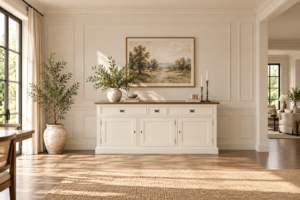
Choosing the right sideboard size can make a significant difference to how your home looks and functions. A sideboard that is too large can make a room feel cramped, while one that is too small may not provide enough storage or look balanced against the surrounding furniture.
The key is to consider more than the available wall space. You also need to think about the room layout, walking clearance, storage requirements and the furniture already in place.
Whether you are furnishing a dining room, living room or entryway, this guide explains how to choose a sideboard size that fits your space and everyday needs.
1. Measure Your Available Wall Space
Before choosing a sideboard, measure the wall where you plan to place it. Record the available width and height, and check whether nearby doors, windows, switches or built-in cabinets could affect its position.
Avoid choosing a sideboard based on wall width alone. You need enough room to move comfortably around it and access nearby furniture.
As a practical starting point, leave some visible wall space on either side of the sideboard where possible. The exact amount depends on the room and the surrounding furniture, but the piece should look intentional rather than squeezed into the available gap.
Also measure the depth of the space. A sideboard that fits the wall may still project too far into a narrow walkway.
2. Choose the Right Sideboard Width for Your Room
The ideal sideboard width depends on the size of the wall and the furniture around it.
For small rooms and compact apartments
A narrow or compact sideboard can provide useful storage without overwhelming the room. Look for a design that accommodates everyday essentials while preserving open floor space.
A width of around 80–120 cm can be a useful starting point, depending on your layout and storage needs.
For medium-sized rooms
A sideboard measuring approximately 120–160 cm wide may provide a good balance between storage and proportion. This size can work well in many dining rooms and living areas, provided there is sufficient clearance.
For larger rooms
A wider sideboard of approximately 160–200 cm or more can suit a spacious dining room or a long living room wall. Larger designs can also provide a visual anchor for artwork, mirrors or other decorative elements.
These measurements are general guidelines rather than strict rules. Always measure your own space and check the dimensions of the specific piece before buying.
3. Get the Sideboard Depth Right
Depth is especially important in Singapore homes, where dining areas, living rooms and walkways may share limited floor space.
A sideboard that is too deep can interfere with movement, even if its width is suitable.
Many sideboards fall within an approximate depth range of 35–50 cm. Slimmer designs can work well in narrow spaces, while deeper pieces may offer more practical storage for tableware, serving dishes or larger household items.
Before purchasing, consider what you intend to store inside. Plates, bowls and serving pieces may require more usable depth than small accessories or documents.
Remember to account for handles, doors and drawers. A cabinet’s overall dimensions do not always tell you how much space you need when opening it.
4. Consider the Ideal Sideboard Height
Sideboard height affects both functionality and visual balance.
Many designs are approximately 75–90 cm tall, although the right height depends on the intended use and the proportions of the room.
For a dining room, a sideboard around standard table height can be convenient for placing serving dishes, drinks and tableware. It can also work as a surface for occasional entertaining.
In a living room, a lower sideboard may create a more relaxed appearance, particularly when positioned beneath artwork or a large mirror. A taller design may provide additional storage where floor space is limited, but it should not make the room feel top-heavy.
If you plan to place a television above the sideboard, check the combined height and viewing position carefully. Ensure that the arrangement is comfortable and that the furniture is suitable for the television’s weight and mounting requirements.
5. Leave Enough Walking and Opening Clearance
A sideboard should improve your room’s functionality, not obstruct it.
In a dining room, measure the space between the sideboard and the dining table. You need enough room for people to move behind seated diners, open cabinet doors and access stored items.
As a general planning guide, aim for approximately 90 cm of clear space along a main walkway where possible. In tighter areas, the amount required will depend on how frequently the route is used and whether doors or drawers need to open into it.
Before finalising your purchase, mark the proposed sideboard footprint on the floor using masking tape. You can then check how it affects movement and nearby furniture.
This simple step can help you spot sizing problems before delivery.
6. Choose a Size That Matches Your Dining Table
If you are buying a sideboard for your dining room, consider how its proportions relate to your dining table.
A sideboard that is too small may look disconnected from a large dining set, while an oversized cabinet can dominate a compact dining area.
For a balanced arrangement, compare the sideboard’s width with the dining table, the available wall space and the overall scale of the room. The pieces do not need to match exactly, but their proportions should feel harmonious.
Think about how you use the dining area, too. If you regularly entertain guests, a larger sideboard may be useful for storing tableware and preparing food for serving. If you mainly need storage for occasional-use items, a compact design may be sufficient.
Explore dining furniture at Home of Homes:
https://www.homeofhomes.com.sg/product-category/dining/
7. Think About Storage Before Choosing Dimensions
The biggest sideboard is not necessarily the most practical choice. The right size depends on what you need to store.
For dining rooms, consider plates, glasses, cutlery, table linens and serving accessories. Adjustable shelves or a combination of drawers and cupboards may help organise different items.
For living rooms, you may need space for books, board games, electronics or everyday household essentials. Check whether the internal compartments suit the size and shape of these items.
For entryways, a shallower sideboard may be more appropriate for keys, documents and small accessories.
Pay attention to the usable interior dimensions, not just the exterior measurements. Drawer depth, shelf spacing and internal dividers can all affect how much a sideboard can hold.
8. Match the Sideboard to Your Interior Style
Size is only one part of choosing the right sideboard. Its design and finish should also work with the rest of your home.
In a compact room, a sideboard with raised legs can create a sense of openness by revealing more of the floor beneath it. A streamlined silhouette may also feel less imposing than a heavily detailed cabinet.
In a larger room, a solid wood sideboard with a substantial frame can add warmth and character. Rich timber finishes can complement traditional interiors, while simpler profiles may suit contemporary or modern classic spaces.
You do not need to match every piece of furniture exactly. Instead, consider the relationship between wood tones, shapes, finishes and the overall visual weight of the room.
For more guidance, read:
https://www.homeofhomes.com.sg/how-to-choose-the-right-wood-tone-for-your-flooring-and-walls/
9. Common Sideboard Sizing Mistakes to Avoid
A few simple mistakes can make even a well-designed sideboard difficult to live with.
Measuring only the width: Check the depth, height and clearance around the piece as well.
Ignoring door and drawer openings: Make sure cabinet doors and drawers can open fully without hitting dining chairs or other furniture.
Choosing storage you do not need: A larger cabinet may take up valuable floor space without providing a meaningful benefit.
Forgetting delivery access: Measure doorways, corridors, lifts and tight turns to confirm that the sideboard can reach its intended location.
Focusing on appearance alone: A sideboard should suit your interior, but it must also accommodate your belongings and daily routines.
Taking these factors into account can help you choose a piece that works well beyond its initial appearance.
Frequently Asked Questions
What is the standard size of a sideboard?
Many sideboards are approximately 120–160 cm wide, 35–50 cm deep and 75–90 cm tall. However, dimensions vary by design, so check the product specifications before purchasing.
How much space should I leave around a sideboard?
Leave enough room for comfortable movement and for any doors or drawers to open fully. Approximately 90 cm is a useful target for a main walkway where possible, although smaller spaces may require a different arrangement.
Can I put a sideboard in a small living room?
Yes. Choose a compact or slimline design that provides the storage you need without blocking walkways. Measuring the available wall and floor space first can help you avoid buying a cabinet that feels too bulky.
Should a sideboard be lower than a dining table?
Not necessarily. A sideboard around dining-table height can be convenient for serving and entertaining, but a slightly taller or shorter design may work just as well. Consider the proportions of the furniture and how you intend to use the surface.
How do I know if a sideboard will fit through my doorway?
Check the sideboard’s full dimensions and compare them with the clear width and height of your entrance, corridors and lift. Account for handles, packaging, turning space and any removable components. Confirm the delivery requirements with the retailer before placing your order.
Find the Right Sideboard for Your Home
The right sideboard size comes down to finding a balance between available space, practical storage and visual proportion. Measure your room carefully, allow enough clearance for movement and choose dimensions that suit the way you use your home.
At Home of Homes, you can explore furniture designed to bring together function and timeless style. Browse our dining furniture collection to find a sideboard that complements your dining area and works with your existing interior.