
Uncategorized
Furniture Size for Small Living Room: A Simple Guide
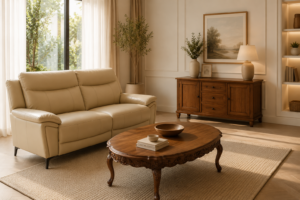
Choosing the right furniture size for a small living room can make a surprisingly big difference. Even a well-designed room can feel cramped when the sofa is too large, the coffee table takes up too much floor space, or storage furniture overwhelms the walls.
The goal is not to fill every available corner. Instead, the right furniture size for a small living room should create enough space to move comfortably while still giving the room everything it needs.
Whether you live in an apartment, condominium, HDB flat, or a compact home in Singapore, these simple guidelines can help you choose furniture that feels balanced, practical, and visually lighter.
1. Start With the Room, Not the Furniture
One of the most common mistakes when furnishing a small living room is buying furniture first and trying to make it fit later.
Before choosing a sofa or coffee table, measure the room carefully.
Measure:
- The overall length and width of the room
- Doorways and entrances
- Window positions
- Built-in cabinets
- TV placement
- Main walking paths
- The distance between the living room and other areas
Don’t forget to measure the doorway, lift, staircase, and hallway if you’re purchasing a large piece of furniture. A sofa that fits perfectly inside the room is not useful if it cannot get through the entrance.
Once you understand the available space, you can make better decisions about furniture size for a small living room.
2. Choose a Sofa That Fits Without Taking Over
The sofa is usually the largest piece of furniture in a living room, so it should be your first major consideration.
For a compact room, avoid automatically choosing the biggest sofa that fits against the wall. A sofa can technically fit while still making the entire room feel crowded.
Instead, look at:
- Overall sofa width
- Depth of the seat
- Height of the back
- Armrest thickness
- Leg design
- Clearance around the sofa
A sofa with slimmer arms can provide more usable seating without increasing its overall footprint.
Sofas with visible legs can also create a lighter visual effect because you can see more of the floor underneath. This can make the room feel more open compared with a very bulky sofa that sits directly on the floor.
When considering furniture size for a small living room, remember that visual weight matters just as much as measurements.
3. Don’t Forget Sofa Depth
Width isn’t the only measurement that matters.
A sofa with a very deep seat can take up considerably more floor space than expected. This becomes especially important in narrow living rooms where every centimetre affects the walking path.
Before buying, measure the sofa’s:
Width + depth + clearance
For a compact living room, a slightly shallower sofa may provide a better balance between comfort and available floor space.
If you enjoy lounging, consider whether a compact chaise or ottoman would work better than an oversized sectional.
The best furniture size for a small living room should support how you actually use the space rather than simply maximise the number of seats.
4. Pick a Coffee Table That Leaves Enough Breathing Room
Coffee tables are another area where size can easily go wrong.
A coffee table should be large enough to be useful, but not so large that it blocks the space between the sofa and other furniture.
As a general starting point, leave around 40–45 cm of space between the sofa and coffee table. This gives enough room to move your legs, stand up, and walk around comfortably.
The coffee table should also relate proportionally to the sofa.
A long sofa can usually accommodate a longer coffee table, while a compact sofa may look better with a smaller rectangular, round, or oval table.
For particularly tight spaces, consider:
- Round coffee tables
- Oval tables
- Nesting tables
- Small movable tables
- Ottomans that can double as tables
These options can make the room more flexible without sacrificing function.
5. Leave Clear Walking Paths
A small room needs breathing space.
Instead of asking, “How much furniture can I fit?”, ask:
“How easily can I move around the room?”
Try to maintain a clear route between major areas such as:
- The entrance and sofa
- Sofa and TV
- Living room and dining area
- Sofa and balcony or windows
- Main walkway through the home
You don’t necessarily need a huge amount of empty space, but the main circulation path should feel natural rather than squeezed between furniture.
This is one of the most important principles when choosing furniture size for a small living room.
6. Don’t Push Every Piece Against the Wall
It may seem logical to push every piece of furniture against the wall to create more floor space.
However, this can sometimes make a room feel less balanced.
If the layout allows, slightly pulling the sofa away from the wall can create a more intentional seating area. Even a small amount of separation can make the room feel more designed rather than simply filled with furniture.
That said, this depends on the room. In a very small living room, placing the sofa against the wall may actually be the most practical solution.
The key is to prioritise flow over rules.
7. Choose Storage Based on Vertical Space
Storage furniture can quickly consume valuable floor area.
Instead of adding multiple low and wide cabinets, consider using vertical storage when appropriate.
A taller display cabinet or bookcase can provide significant storage without spreading across the entire wall.
This is particularly useful for small homes where floor space is limited.
You can also combine open and closed storage. Display a few decorative pieces while keeping everyday items behind doors or drawers.
However, avoid filling every shelf. Leaving some negative space helps the furniture and the room feel less visually heavy.
8. Pay Attention to Furniture Height
Furniture height can affect how spacious a room feels.
Tall, bulky furniture can visually dominate a compact living room, especially when placed directly opposite the sofa.
For a smaller space, consider mixing different heights.
For example, you could combine:
- A medium-height sofa
- A low coffee table
- One taller storage piece
- A small side table
- Wall-mounted or elevated decor
This creates visual variety without making everything compete at the same level.
A tall display cabinet can still work beautifully in a small room if it is relatively narrow and positioned where it doesn’t interrupt the main sightline.
9. Consider the Visual Weight of Wood Furniture
Solid wood furniture can add warmth, character, and texture to a living room. However, darker or heavily detailed pieces can sometimes appear visually heavier in a compact space.
This doesn’t mean you need to avoid solid wood furniture.
Instead, consider the combination of:
Size + colour + shape + leg design + surrounding space.
For example, a compact solid wood coffee table with clean lines can feel much lighter than an oversized table with thick legs and a very dark finish.
Similarly, a wooden cabinet with glass doors can help break up a large solid surface and allow the eye to see through part of the furniture.
The right furniture size for a small living room is therefore about more than measurements. The design and finish also influence how large a piece feels.
10. Use Fewer, Better Pieces
One of the easiest ways to make a small living room feel crowded is adding too many individual pieces.
You may have:
- A large sofa
- Two armchairs
- A coffee table
- Two side tables
- A TV cabinet
- A display cabinet
- Several storage units
Individually, each item may look fine. Together, they can overwhelm the room.
Instead, think about which pieces are genuinely necessary.
A well-proportioned sofa, coffee table, TV or storage unit, and one carefully selected accent piece may create a much more comfortable room than filling every corner.
11. Use Furniture That Serves More Than One Purpose
Small living rooms benefit from flexible furniture.
Look for pieces that can perform multiple functions.
For example:
- An ottoman can work as seating and a footrest.
- A storage coffee table can hide everyday items.
- A console can provide storage while doubling as a display surface.
- A compact side table can be moved when needed.
- A cabinet can combine closed storage with display space.
Multi-functional furniture reduces the number of pieces you need, which helps maintain better circulation.
12. Think About the Space Around the Furniture
Choosing the right furniture size for a small living room isn’t only about the furniture itself.
The space surrounding each piece is equally important.
A beautiful sofa can look oversized if it is surrounded by too many objects. On the other hand, a relatively substantial piece can look perfectly proportioned when there is enough breathing room around it.
Before making a purchase, imagine the furniture in the room with everything else already in place.
Ask yourself:
- Can I walk around it comfortably?
- Can doors and drawers open fully?
- Does it block windows or natural light?
- Does it interrupt the main walkway?
- Is there enough space between seating and the coffee table?
- Does the room still feel visually open?
These questions can prevent expensive furniture-buying mistakes.
13. Don’t Forget Scale When Mixing Furniture
You don’t need every piece of furniture to be exactly the same size.
In fact, mixing scales can make a room feel more interesting.
The key is to avoid having too many oversized pieces competing with each other.
For example, if you already have a substantial sofa, you may want a lighter coffee table and a slimmer side table.
If you have a large display cabinet, keep the surrounding furniture relatively simple.
Think of the room as a composition where each piece has a role.
14. Measure Before You Buy
One of the simplest ways to avoid choosing the wrong furniture size for a small living room is to recreate the furniture dimensions on your floor.
Use masking tape to mark:
- Sofa dimensions
- Coffee table dimensions
- Cabinet dimensions
- Walking paths
Then walk around the marked area.
This gives you a surprisingly accurate sense of whether the furniture will feel comfortable in the room.
You can also use cardboard boxes or newspaper to roughly visualise the footprint of larger pieces.
It is much easier to move tape than to return a heavy piece of furniture.
Create a Small Living Room That Feels Comfortable, Not Crowded
Choosing the right furniture size for a small living room isn’t about buying the smallest furniture available. It is about finding the right balance between comfort, function, proportion, and movement.
Start with the dimensions of your room, choose your sofa carefully, maintain comfortable walking paths, and avoid filling every available corner. When selecting solid wood furniture, consider not only its physical dimensions but also its colour, shape, finish, and visual weight.
At Home of Homes, you can explore furniture designed to bring character and functionality into everyday living spaces, from living room pieces and storage solutions to solid wood furniture and other home collections.
To explore the collection and find furniture for your space, visit:
https://www.homeofhomes.com.sg/