
Uncategorized
Where to Put Your Largest Piece of Furniture: A Simple Guide
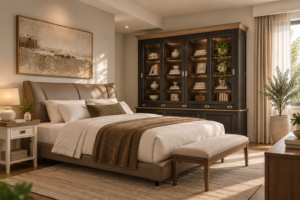
When planning a room, it is tempting to start with the smaller details — a coffee table, sideboard, armchair or decorative pieces. But in most homes, the largest piece of furniture has the biggest influence on how the entire space feels.
So where should you put it?
The answer depends on the room, the layout and how you use the space. But generally, your largest furniture piece should sit in a position that feels intentional, balanced and easy to live around.
In a living room, that might mean positioning the sofa against the longest wall. In a bedroom, the bed usually becomes the natural focal point. In a dining area, the dining table often needs to anchor the room without interrupting the main walking path.
Getting this first decision right can make the rest of the room much easier to design.
Why the Largest Piece of Furniture Matters
Your largest furniture piece usually creates the visual anchor of the room.
Think about walking into a living room. Your eyes are likely to notice the sofa before the side table or accessories. In a bedroom, the bed immediately establishes the room’s character. In a dining room, the table determines how the chairs, lighting and surrounding furniture are arranged.
This is why it makes sense to decide where to put your largest piece of furniture before adding smaller items.
Once the main piece is positioned correctly, you can build the rest of the room around it.
This approach also helps prevent a common interior design problem: buying several beautiful furniture pieces individually without considering how they will work together.
For more guidance on proportions, see our article on Furniture Size for Small Living Rooms: A Simple Guide.
Start With the Room’s Natural Focal Point
Before moving furniture around, look at the room itself.
Ask yourself:
- Where does your eye naturally go?
- Where are the windows?
- Is there a TV or fireplace?
- Which wall is the longest?
- Where are the doors?
- What is the main walking route?
- Where does the natural light come from?
The largest furniture piece should usually support the room’s natural focal point rather than compete with it.
For example, if your living room has large windows overlooking the city, you may not want to position a tall cabinet directly in front of them.
Instead, the sofa could face the windows while keeping the view open.
Similarly, if the TV is the main focal point, positioning the sofa directly opposite it creates a clear and practical arrangement.
The goal is to make the room feel as though the furniture placement was planned with the architecture, rather than forced into it.
Where Should You Put the Largest Piece of Furniture in a Living Room?
For most living rooms, the sofa is the largest furniture piece.
A good starting point is to position the sofa along the longest available wall, particularly in a compact room.
This can create a strong visual anchor while keeping the centre of the room open.
However, this is not a rule that needs to be followed in every home.
In a larger living room, placing the sofa away from the wall can actually work better. It can help define a conversation area and create a more sophisticated layout.
For example, a large sofa can sit in the centre of the room facing a TV console, with a coffee table between them.
The important thing is to maintain enough space around the furniture for comfortable movement.
Don’t Automatically Push Everything Against the Wall
One of the most common furniture layout habits is pushing every piece against a wall.
It seems logical because it creates more open space in the middle.
But sometimes, it does the opposite visually.
A large living room can feel disconnected when the sofa, chairs and cabinets are all pushed to the edges.
Instead, consider creating a defined seating zone.
A sofa can sit slightly away from the wall, with an armchair or side table helping to complete the arrangement.
This works particularly well in larger HDB flats, condominiums and open-plan homes.
In smaller rooms, however, keeping a large sofa closer to the wall can often preserve valuable floor space.
The right decision depends on the room’s proportions.
Use the Longest Wall Strategically
When deciding where to put your largest piece of furniture, start by identifying the longest uninterrupted wall.
This is often the best location for a sofa, bed or substantial storage piece.
Why?
Because a large furniture piece needs enough surrounding space to feel balanced.
Putting a large sofa against a very short wall can make the sofa appear oversized. Placing it along a longer wall can make the same sofa feel much more proportionate.
The same idea applies to cabinets.
A wide sideboard often looks more intentional when centred on a suitable wall rather than squeezed into a narrow corner.
This is particularly important with solid wood furniture because natural wood tends to have strong visual character.
Think About the Main Walking Path
A beautiful furniture arrangement is not successful if people cannot move comfortably through the room.
Before deciding where to put your largest piece of furniture, identify the routes people naturally use.
For example:
Entrance → Living room → Dining area
or:
Bedroom door → Wardrobe → Bed → Bathroom
Your furniture should support these movements rather than interrupt them.
Avoid placing a large sofa, cabinet or dining table directly in a major walkway.
This is especially important in Singapore homes where living, dining and kitchen spaces are often connected.
A piece may fit perfectly on paper but still make everyday movement awkward.
For more tips on avoiding cramped layouts, see The Furniture Mistake That Makes Your Home Look Smaller.
In a Bedroom, Let the Bed Lead
The bed is almost always the largest and most important piece in a bedroom.
Instead of starting with the wardrobe or bedside tables, position the bed first.
A traditional arrangement is to place the headboard against the strongest wall, ideally where the bed can be seen clearly when entering the room.
Then build around it.
Once the bed is positioned, you can determine:
- Where the bedside tables should go
- How much wardrobe space is available
- Where to place a dresser
- Whether a bench is appropriate
- How much walking space remains
This makes the bedroom feel more balanced because the largest piece establishes the room’s structure.
Don’t Put Your Largest Piece Where It Blocks Natural Light
Natural light is one of the most valuable elements in a home.
A large piece of furniture placed directly in front of a window can make the room feel darker and more enclosed.
This doesn’t mean you can never put furniture near windows.
A low sofa, console or bench can sometimes work well.
The concern is mainly with tall or bulky furniture that blocks a significant portion of the window.
In Singapore homes, where natural light can make a compact space feel considerably brighter and more open, protecting your main sources of daylight can make a noticeable difference.
How to Position a Large Dining Table
The dining table often becomes the largest furniture piece in an open-plan dining area.
When deciding where to put your largest piece of furniture in this space, don’t only measure the tabletop.
Consider the entire dining footprint.
You need space for:
- The table
- Dining chairs
- People sitting down
- People walking behind chairs
- Access to the kitchen
- Nearby cabinets or storage
A six-seater table may technically fit, but if the chairs constantly obstruct the walkway, it isn’t the right size or position.
If space is limited, an oval or round dining table can sometimes create a softer circulation path than a large rectangular table.
Let One Large Piece Become the Statement
You don’t need every furniture piece to make a statement.
In fact, the room can feel more sophisticated when one substantial piece takes the lead.
Imagine a living room with:
A large solid wood coffee table.
A substantial sofa.
A large sideboard.
A tall display cabinet.
An oversized TV console.
Individually, these pieces may all be attractive.
Together, they could create too much visual weight.
Instead, choose one main statement piece and allow the other furniture to support it.
For example, a beautiful solid mahogany sideboard can become the focal point against a relatively simple wall.
The rest of the room can then use lighter furniture and softer textures to balance the rich wood.
Consider Visual Weight, Not Just Physical Size
This is particularly important when working with solid wood furniture.
A piece does not have to be physically enormous to feel large.
Dark wood, thick frames, carved details and substantial construction can all increase visual weight.
A slim light-coloured cabinet might feel almost invisible in a room.
A dark mahogany cabinet of similar dimensions can immediately attract attention.
That is not a disadvantage.
It simply means you should consider what the furniture will look like as part of the whole room.
This is one reason solid wood furniture can work particularly well as a focal point.
Its natural grain and materiality give the room character without requiring excessive decoration.
For more ideas, see Why Singapore Homeowners Choose Solid Wood Furniture.
Balance Large Furniture With Smaller Pieces
Once you have positioned the largest piece, don’t immediately add another large item beside it.
Instead, create contrast.
Pair a substantial sofa with a lighter side table.
Pair a large wooden dining table with visually lighter chairs.
Pair a substantial sideboard with simple wall décor.
Pair a large bed with slim bedside tables.
This creates visual breathing room.
The room doesn’t need every item to have the same visual weight.
In fact, variation is what makes an interior feel layered and natural.
What About HDB Homes?
For HDB homeowners, furniture placement can be particularly important because living and dining spaces often need to perform several functions.
A single room might need to accommodate:
- Relaxing
- Watching TV
- Entertaining guests
- Dining
- Storage
- Working
- Moving between rooms
This means the largest piece should not simply occupy the biggest available area.
It should support how the household actually uses the room.
For example, if your family spends most evenings watching TV together, prioritising the sofa and TV relationship makes sense.
If you frequently entertain guests, you may want to create a more open conversation area.
If storage is your biggest concern, a large sideboard or cabinet may deserve a more prominent position.
The best furniture layout is ultimately the one that works with your lifestyle.
HDB also provides renovation guidelines and requirements for homeowners planning renovation works. HDB Renovation Guidelines
Don’t Forget the Ceiling Height
Furniture placement is usually considered horizontally, but height matters too.
A tall cabinet in a room with low ceilings can feel imposing.
Meanwhile, a low-profile sofa or console can make the ceiling feel visually higher.
If your home has a relatively low ceiling, consider combining one substantial piece with furniture that has a lower profile.
In a room with higher ceilings, taller furniture can help fill the vertical space.
The idea is to create balance from floor to ceiling, not just from wall to wall.
Create Breathing Room Around Your Largest Piece
One of the easiest ways to make a large furniture piece feel intentional is to give it enough surrounding space.
This is particularly important for statement pieces.
A large wooden cabinet squeezed between two other pieces will probably feel cramped.
The same cabinet with some breathing room around it can feel elegant and deliberate.
Think of empty space as part of the design.
You don’t need to use every centimetre of your home.
Sometimes the empty space around a beautiful piece is what makes the piece stand out.
How to Test Your Furniture Layout Before Buying
If you’re unsure where to put your largest piece of furniture, try testing the layout before committing.
You can use masking tape to mark the furniture’s dimensions directly on the floor.
For example, if you’re considering a 220 cm sofa, mark out its approximate width and depth.
Then walk around it.
Check the distance to:
- Coffee table
- TV console
- Dining area
- Doors
- Windows
- Other furniture
You can do the same with dining tables, beds and cabinets.
Another option is to use simple cardboard boxes to approximate the size of bulky furniture.
It may look slightly strange, but it gives you a much better idea of how the room will actually feel.
A Simple Rule: Start Big, Then Go Small
When designing a room, work from the largest furniture piece down.
Start with:
1. The largest piece
Decide where it belongs.
2. The main function
Determine what the room is primarily used for.
3. The second-largest piece
Add supporting furniture without competing with the main piece.
4. Walking paths
Make sure people can move comfortably.
5. Smaller furniture
Add coffee tables, side tables, chairs and storage.
6. Décor
Only then add artwork, lamps, cushions and accessories.
This approach makes furniture selection much easier because you’re not trying to solve the entire room at once.
Common Mistakes to Avoid
When deciding where to put your largest furniture piece, avoid these mistakes:
Putting it in the first available space
The largest empty wall isn’t automatically the best location.
Blocking windows
Large furniture can reduce natural light and make the room feel darker.
Ignoring circulation
A beautiful layout becomes frustrating if people have to walk around furniture constantly.
Using too many statement pieces
Several large furniture pieces can compete for attention.
Forgetting visual weight
Dark or heavily detailed furniture can feel larger than its actual dimensions.
Buying before measuring
Always measure both the furniture and the room.
Copying a showroom
A showroom has different proportions and fewer everyday belongings than your home.
The Best Place for Your Largest Piece Is Where It Makes the Room Work
So, where should you put your largest piece of furniture?
Usually, the answer is where it can anchor the room without restricting it.
Use the longest suitable wall. Protect natural light. Consider the main walking paths. Think about the room’s focal point. And most importantly, consider how you actually use the space.
For HDB homes and other Singapore apartments, this approach can make a significant difference.
You don’t necessarily need smaller furniture.
You need better furniture placement.
A well-positioned sofa can make a living room feel more spacious. A carefully placed dining table can create a natural connection between the kitchen and living area. And a substantial solid wood piece can become a beautiful focal point when it has enough room to breathe.
At Home of Homes, furniture is designed to bring character, warmth and timeless style into Singapore homes. Whether you’re furnishing an HDB flat, condominium or larger residence, start with the piece that matters most — then build the room around it.
Explore furniture for your home at Home of Homes Furniture Singapore.