
Uncategorized
Solid Wood vs Veneer: What’s Really Behind the Price Difference?
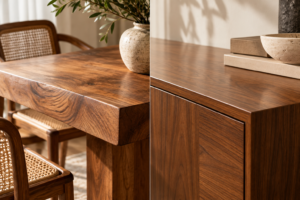
When comparing furniture, the price difference between solid wood and veneer can sometimes be surprisingly large. At first glance, both can look beautiful. So what are you actually paying for?
The answer goes beyond appearance.
Solid wood vs veneer is really a comparison of material, construction, craftsmanship, durability and long-term value. Veneer can be a practical and attractive material, but when the priority is furniture that you intend to keep for many years, solid wood is generally the stronger choice.
That is especially true for major furniture pieces such as dining tables, beds, desks, cabinets and statement pieces that are expected to become part of a home for years rather than seasons.
The higher price of solid wood is not simply about making furniture look more luxurious. You are also paying for the natural material, substantial construction, craftsmanship and the long-term character of the piece.
What Is the Difference Between Solid Wood and Veneer?
Before comparing which is better, it helps to understand what each material actually means.
Solid wood furniture is made from natural timber used as a substantial material in the furniture’s construction. The wood retains its natural grain, colour variation and character.
Wood veneer, on the other hand, is a thin layer of real wood applied over another material or substrate. According to the USDA Forest Products Laboratory, decorative veneer can be extremely thin and is laminated onto a substrate using adhesive.
This distinction is important.
Veneer is real wood. It is not the same as a printed wood-look finish or laminate.
However, a veneered piece and a solid wood piece are still fundamentally different constructions.
And when it comes to furniture you plan to keep for a long time, that difference matters.
Why Does Solid Wood Cost More?
The first reason is simple: you are buying more natural timber.
Solid wood furniture uses substantial pieces of timber throughout key parts of the construction. The material itself can represent a significant part of the furniture’s cost.
However, material is only one part of the equation.
The final price can also reflect:
- Wood species and grade
- Timber preparation and drying
- Thickness of the wood
- Joinery
- Construction methods
- Hand finishing
- Surface preparation
- Hardware
- Design complexity
- Size and weight
- Craftsmanship
The USDA Wood Handbook notes that wood products vary considerably in physical and mechanical properties, moisture behaviour, finishing requirements and construction characteristics.
So when you see a solid wood dining table priced significantly higher than a veneer alternative, you are not necessarily paying simply for a different surface.
You may be paying for a completely different level of material and construction.
Solid Wood vs Veneer: Which One Is More Durable?
This is where solid wood starts to become particularly compelling.
Good-quality solid wood furniture can be extremely durable when it is properly constructed, finished and cared for. Natural wood has a long history of use in furniture and other applications because of its strength, workability and durability.
However, durability should not be confused with being completely maintenance-free.
All wood furniture responds to its environment.
Changes in moisture can cause wood to expand and contract. Proper drying, construction and finishing therefore matter greatly to long-term performance. The USDA Wood Handbook specifically discusses moisture content and dimensional changes as important considerations when working with wood.
The difference is that solid wood gives you substantial material to work with.
A well-made solid wood table, cabinet or desk can remain useful for many years and, depending on its construction and finish, may also have the potential to be repaired, refinished or restored.
That makes it particularly attractive for furniture intended as a long-term purchase.
Why Solid Wood Ages Better
One of the biggest advantages of solid wood is something you cannot fully appreciate when furniture is brand new.
It gets better with age.
Natural timber develops character as it is used. Small changes in colour, grain and surface can become part of the furniture’s story.
Instead of looking outdated after several years, a well-designed solid wood piece can become more distinctive.
This is particularly noticeable with rich hardwood furniture.
A dining table that has been used for family dinners for ten years can carry a sense of history that a newly purchased piece simply cannot replicate.
That is one reason solid wood furniture is often considered an investment rather than a temporary furnishing.
Veneer Can Look Beautiful — But Appearance Is Not Everything
One reason the solid wood vs veneer debate can be confusing is that veneer can look remarkably good.
A high-quality veneer can provide a beautiful and consistent wood surface. Because the visible surface is made from real wood, it can reproduce attractive grain patterns while using timber more efficiently.
For certain designs, this can be an advantage.
Veneer can also work particularly well when a designer wants a very consistent appearance across a large surface.
But there is an important distinction:
Looking like natural wood and being substantially constructed from natural wood are not the same thing.
A veneer piece can have an attractive surface without offering the same material depth as a solid wood piece.
For buyers who care about the furniture’s long-term material value, this distinction becomes more important.
Solid Wood Gives Furniture More Natural Character
No two pieces of natural timber are exactly the same.
That variation is part of the appeal.
You may notice differences in:
- Grain direction
- Colour
- Knots
- Texture
- Tonal variation
- Natural markings
Rather than being imperfections, these details can give solid wood furniture its personality.
This is particularly valuable in premium interiors where furniture is intended to feel considered rather than mass-produced.
A solid wood dining table, for example, can become a visual anchor for the entire room.
The material itself contributes to the atmosphere.
What About Refinishing?
Another important consideration is what happens when furniture gets older.
Solid wood generally gives you more material depth to work with if the piece needs restoration or refinishing. Depending on the construction and finish, a solid wood surface may be sanded and refinished over its lifetime.
That does not mean every solid wood piece can simply be sanded repeatedly.
The finish, thickness, construction and condition all matter.
Veneer requires greater care because the decorative wood layer is much thinner. Aggressive sanding can damage the veneer surface and expose the substrate underneath.
The USDA specifically notes that finishing and refinishing depend on the wood product, substrate and type of finish being used.
For this reason, solid wood offers an advantage when you are thinking about furniture longevity rather than just initial appearance.
Solid Wood vs Veneer in Singapore’s Climate
Singapore homes also have another factor to consider: moisture.
Wood is hygroscopic, meaning it interacts with moisture in its environment. Changes in moisture content can lead to dimensional changes in wood products.
This is important for both solid wood and veneer furniture.
Good construction and proper finishing therefore matter regardless of which material you choose.
Veneered furniture can also experience surface problems when moisture conditions change. The USDA Forest Products Laboratory notes that moisture changes can contribute to buckling or cracking in veneered furniture and cabinetry.
For Singapore homes, the lesson is simple:
Quality construction matters as much as the material itself.
A well-made piece with appropriate finishing and sensible care will always be a better investment than furniture chosen purely because it is inexpensive.
Is Veneer Always Cheaper?
Not necessarily.
This is another misconception worth clearing up.
Premium veneer can be expensive. The quality of the veneer, substrate, craftsmanship, design and finishing can all influence the final price.
So it would be inaccurate to say:
Veneer = cheap furniture
Solid wood = expensive furniture
The reality is more nuanced.
However, when comparing two pieces of similar design, size and quality, solid wood can command a higher price because it requires more natural timber and can involve more substantial construction.
The more useful question is therefore not:
“Why is this solid wood piece more expensive?”
Instead, ask:
“What am I getting for the additional investment?”
What Are You Really Paying For With Solid Wood?
When you buy quality solid wood furniture, you are paying for more than the visible surface.
You are paying for:
1. The natural material
The furniture contains substantial natural timber rather than simply a thin decorative layer.
2. Construction
The way the furniture is assembled influences how it performs over time.
3. Craftsmanship
Details such as joinery, proportions, finishing and surface preparation can make a significant difference.
4. Longevity
A quality solid wood piece can be designed to stay in your home for many years.
5. Character
Natural grain and colour variation give each piece a slightly different appearance.
6. Long-term value
Instead of treating furniture as something to replace every few years, solid wood allows you to think about the piece as part of the home for the long term.
That is ultimately where the price difference starts to make sense.
When Is Solid Wood Worth the Investment?
If you are furnishing an entire home, you do not necessarily need to choose solid wood for every single piece.
Instead, think about where quality matters most.
Solid wood is particularly worth considering for furniture that you use frequently or expect to keep for a long time.
Dining tables
A dining table is one of the best places to invest in solid wood.
It receives daily use, becomes a gathering point and often remains in a home for many years.
Beds
A bed is another piece where substantial construction can make a difference.
Rather than treating it as a temporary furnishing, a solid wood bed can become part of the bedroom for years.
Desks
For a home office or executive workspace, a solid wood desk provides both durability and visual weight.
Cabinets and sideboards
A well-made solid wood cabinet can become a statement piece rather than simply storage.
Statement furniture
If there is one particular piece that defines your room, choosing solid wood can make that investment feel more worthwhile.
When Can Veneer Make Sense?
There are situations where veneer is a perfectly reasonable choice.
For example, veneer can make sense when you want:
- A consistent wood appearance
- A particular design at a lower price point
- Large uninterrupted surfaces
- Contemporary furniture with specific construction requirements
- A piece that does not need to be a long-term heirloom
There is nothing inherently wrong with choosing veneer.
The important point is to understand what you are buying.
If the furniture is intended to be replaced after a few years, the lower initial cost may make sense.
But if you are choosing a major furniture piece that you want to keep for ten, fifteen or twenty years, the calculation changes.
Why Solid Wood Makes More Sense for Long-Term Furniture
This is where the decision becomes clearer.
Furniture is not like a decorative accessory.
A dining table, bed, desk or cabinet can remain in your home for a very long time.
When you divide the cost of a quality solid wood piece across many years of use, the initial price can look very different.
For example, imagine buying a dining table that you intend to keep for 15 years.
The question is no longer simply:
“Which table costs less today?”
It becomes:
“Which table will I still be happy to own years from now?”
That is the stronger argument for solid wood.
The value comes from longevity, material quality, timeless design and the possibility of keeping the furniture rather than replacing it.
Solid Wood vs Veneer: What Should You Ask Before Buying?
If you are comparing furniture in a showroom, do not rely only on the product description.
Ask:
What parts are solid wood?
Some furniture can combine different materials. Understanding where solid wood is actually used gives you a clearer picture of the construction.
What species of wood is used?
Oak, walnut, mahogany and teak, for example, have different characteristics and appearances.
What is the substrate?
For veneered furniture, ask what material sits underneath the veneer.
What type of finish is used?
Finishing affects appearance, maintenance and protection. The USDA notes that finishes play an important role in protecting wood surfaces and determining their appearance and cleanability.
How is the furniture constructed?
Joinery and construction quality matter just as much as the material.
Can the piece be maintained or refinished?
This is especially important if you are buying furniture that you expect to keep for many years.
How to Tell If Solid Wood Furniture Is Actually Well Made
Buying solid wood does not automatically guarantee quality.
The craftsmanship still matters.
Look for:
- Consistent and natural grain
- Solid, substantial construction
- Stable joints
- Carefully finished edges
- Smooth surfaces
- Well-fitted drawers and doors
- Quality hardware
- Appropriate finishing
- Proportions that feel balanced
This is why solid wood alone should not be the only deciding factor.
The best furniture combines a good material with good design and good craftsmanship.
For more on what separates quality furniture from ordinary wooden furniture, see our guide to The Difference Between Solid Mahogany and Ordinary Wooden Furniture.
Is Solid Wood Better Than Veneer?
For many homeowners, yes — especially when longevity is the priority.
Veneer has practical advantages. It can be attractive, consistent and suitable for many furniture designs.
But when comparing the two from a long-term furniture perspective, solid wood has several important advantages.
It offers:
- Greater material depth
- Natural grain and character
- Strong long-term appeal
- Potential for repair and refinishing, depending on construction
- A substantial feel
- Long-lasting value
- A timeless quality that can work across changing interior styles
Most importantly, solid wood furniture is designed to be lived with.
It does not need to look brand new forever to remain beautiful.
Its character can develop with time.
The Real Difference Is Long-Term Value
The price difference between solid wood and veneer becomes easier to understand when you stop looking only at the initial purchase price.
Veneer can provide an attractive surface and can be a practical choice for certain furniture.
But solid wood offers something different.
You are investing in a natural material with substantial presence, character and the potential for a long service life.
That makes solid wood particularly suitable for furniture that you do not want to replace every few years.
And that is ultimately the strongest reason to choose it.
You are not simply paying for how the furniture looks today. You are paying for how well it can remain part of your home tomorrow, five years from now and many years beyond that.
Why Solid Wood Furniture Works So Well in Singapore Homes
Singapore homes often need furniture that balances style, function and longevity.
Whether you live in an HDB flat, condominium or landed property, the furniture you choose can significantly influence the character of the space.
Solid wood works particularly well because it does not depend on a short-lived trend.
A well-designed mahogany dining table can work in a classic interior today and still feel appropriate after a future renovation.
The same applies to a solid wood bed, sideboard, desk or cabinet.
This is one reason timeless furniture can be a smarter choice than constantly replacing pieces as interior trends change.
For more ideas, read Why Singapore Homeowners Choose Solid Wood Furniture.
Solid Wood and the Beauty of Timeless Furniture
There is also an emotional difference between buying furniture and buying something simply to fill a room.
The best furniture develops a relationship with the home around it.
A dining table becomes the place where family dinners happen.
A desk becomes part of your daily routine.
A cabinet holds objects collected over the years.
A bed remains through different stages of life.
That is why material matters.
When furniture is intended to stay, solid wood makes more sense because its natural character can become part of the story of the home.
It does not have to look exactly the same forever.
That is part of its appeal.
Final Verdict: Solid Wood Is the Better Long-Term Choice
So, solid wood vs veneer — which is better?
If your priority is simply getting an attractive piece of furniture at the lowest possible price, veneer may be suitable.
But if your priority is quality, longevity, natural character and long-term value, solid wood is the better choice.
The higher upfront price can be justified when the furniture is designed to remain in your home for many years.
Solid wood also offers something that is difficult to replicate: the feeling that you own a piece of natural material rather than simply a piece of furniture designed to look like wood.
For dining tables, beds, desks, cabinets and other important pieces, choosing solid wood can therefore be less about spending more and more about buying once and buying well.
At Home of Homes, our collection brings together timeless furniture designed for Singapore homes, from solid wood dining and living pieces to bedroom and office furniture. Explore our collection if you are looking for furniture with lasting character rather than something designed only for the moment.
Discover the collection:
https://www.homeofhomes.com.sg/
FAQs
Is solid wood better than veneer?
For long-term furniture, solid wood is generally the better choice because it offers substantial natural material, character, durability and potential long-term value. Veneer can still be suitable for specific designs and budgets.
Is veneer real wood?
Yes. Wood veneer is a thin layer of real wood applied over another substrate. It should not be confused with printed wood-look laminate.
Why is solid wood furniture more expensive?
Solid wood furniture can cost more because it uses substantial natural timber and may involve higher material costs, more complex construction, craftsmanship and finishing.
Does solid wood furniture last longer?
Quality solid wood furniture can have a very long service life when properly constructed, finished and maintained. The exact lifespan depends on the wood species, construction, finish and how the furniture is used.
Can solid wood furniture be refinished?
Depending on the construction and finish, solid wood can often provide more scope for refinishing than thin veneer. However, refinishing should always be assessed based on the specific piece.
Is veneer furniture bad?
No. Veneer can be attractive and practical. The important thing is understanding the construction and choosing the material according to how long you expect the furniture to last.
Is solid wood worth the extra money?
For major furniture pieces that you plan to keep for many years, solid wood can be worth the additional investment because of its material quality, longevity, natural character and timeless appeal.