
Uncategorized
The Furniture Height Mistake That Makes Your Home Look Unbalanced
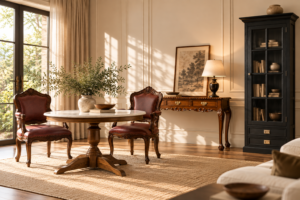
Furniture can be beautiful on its own and still look wrong in a room.
Often, the problem is not the colour, material or style. It is furniture height.
A coffee table that sits too high beside a low sofa can feel awkward. A tall cabinet next to a low sideboard can make one side of the room feel visually heavy. Even a dining table and chairs that technically fit together can become uncomfortable when their heights are poorly matched.
This is why proportion matters so much when furnishing a Singapore home. Especially in an HDB or condominium, where every piece is visible and the room may have limited floor space, small differences in height can change the way the entire interior feels.
The good news is that furniture height is relatively easy to fix once you know what to look for.
Why Furniture Height Matters More Than You Think
When we look at a room, we do not process every measurement individually. We see relationships.
A low sofa beside a low coffee table creates one visual layer. A taller sofa paired with a slightly taller table creates another. A dining table surrounded by chairs of the wrong height immediately feels uncomfortable, even if both pieces are attractive.
The same principle applies throughout the home.
Furniture should not necessarily be the same height. In fact, having everything at exactly the same level can make a room look flat.
Instead, good interiors usually combine different heights that feel intentional together.
Think of it as visual rhythm:
- Low furniture creates openness.
- Mid-height furniture provides the main visual structure.
- Tall furniture draws the eye upward.
- Small height differences create layering.
The mistake is not having different furniture heights. The mistake is having unrelated heights.
The Coffee Table Mistake: Too Tall for the Sofa
This is one of the easiest furniture height mistakes to notice once you know what to look for.
Your coffee table should generally sit around the height of the sofa seat or slightly lower. Wayfair recommends a coffee table that is around the same height as the sofa cushions or about 1–2 inches lower, depending on the setup.
For example, imagine a sofa with a relatively low seat.
Now place a tall coffee table in front of it.
The table can suddenly dominate the seating area. It may also feel uncomfortable when reaching for a drink, book or remote.
A lower coffee table usually creates a more relaxed relationship with a low sofa.
A simple rule
Before buying a coffee table, measure:
- Floor to the top of the sofa cushion
- Floor to the top of the coffee table
- Distance between the sofa and table
As a general starting point, keep the coffee table at approximately the same height as the seat cushion or slightly lower.
For placement, around 30–45 cm between the sofa and coffee table is a useful starting range, although the ideal distance depends on the furniture and circulation in the room. Wayfair recommends 12–18 inches for this clearance.
For more guidance, see our guide to how much space you should leave between furniture.
Your Coffee Table Can Also Be Too Low
Going too low is another common mistake.
Very low coffee tables can look beautiful in photographs, particularly in minimalist interiors. However, if your sofa has a relatively high seat, the difference can become excessive.
The result is a strange visual gap between the seating and the table.
A low table works best when the rest of the seating is designed around it.
This is particularly important when mixing furniture from different collections. A sofa purchased years ago may have a completely different seat height from a new coffee table.
So rather than buying based only on appearance, measure the existing furniture first.
The Dining Table and Dining Chair Height Problem
Furniture height is not only about aesthetics.
At the dining table, it directly affects comfort.
A standard dining table is generally around 28–30 inches high, while standard dining chairs are typically designed with seat heights around 18–23 inches. The exact combination depends on the table and chair design.
The important measurement is the space between the chair seat and the underside of the table.
If the gap is too small, your legs can feel restricted. If it is too large, your arms may sit awkwardly when eating.
Wayfair suggests approximately 10–12 inches of clearance between the seat and underside of the table for comfortable seating.
This becomes particularly important with solid wood dining tables.
A thick tabletop or substantial apron can reduce the usable legroom even when the overall table height looks standard.
So when choosing a dining set, do not look only at:
Table height + chair height.
Also check:
Seat height + underside clearance + tabletop thickness.
Why a Sideboard Can Look Too Tall
Sideboards are another area where proportion can easily go wrong.
A sideboard does not need to be extremely tall to provide useful storage. In fact, a lower sideboard can often create a calmer horizontal line across a dining room.
The problem occurs when a tall cabinet is placed next to a low sideboard without any visual connection.
For example:
Tall display cabinet + very low sideboard + tall floor lamp
can create several competing vertical points.
Instead, consider creating a hierarchy.
A taller cabinet can act as the vertical anchor, while the sideboard remains lower and visually quieter.
This is especially effective in dining rooms because the horizontal line of the sideboard can reinforce the length of the dining table.
If you’re deciding between storage pieces, our guide to sideboard vs chest of drawers can help.
The TV Console Height Mistake
Your TV console and television also need to work together.
A console that is disproportionately tall can make the TV appear lower than expected. Meanwhile, an extremely low console can create a large amount of empty space underneath the screen.
Neither is automatically wrong. The important thing is the relationship between the TV, console, seating and wall.
For a wall-mounted TV, start by considering your seated eye level rather than choosing the console height first.
The television should feel comfortable to watch from the sofa. Then the console can be selected to support the composition below it.
This is one reason why a TV console should not be purchased simply because it “fits” the wall.
Its height, width and depth all affect the visual balance.
For more on this, see our guide: How Long Should Your TV Console Be? The HDB Proportion Rule Most People Miss.
Tall Furniture Is Not Always a Problem
It is easy to assume that shorter furniture is better for a small home.
That is not necessarily true.
Tall furniture can actually make good use of vertical space, particularly in compact Singapore homes.
A tall display cabinet, bookcase or storage unit can draw the eye upward and provide useful storage without taking up a large amount of floor area.
The key is visual weight.
A tall cabinet with glass doors, open shelving or lighter finishes can feel very different from a solid, dark cabinet that fills the entire wall.
The same height can therefore create completely different impressions depending on:
- Colour
- Material
- Depth
- Width
- Transparency
- Surrounding negative space
This is why furniture height should never be considered in isolation.
The Real Problem: Everything Is at the Same Height
Interestingly, another common mistake is making everything too similar.
Imagine a room where:
- The sofa back is low.
- The coffee table is low.
- The sideboard is low.
- The TV console is low.
- The artwork is hung low.
The room may technically have good proportions, but visually it can feel compressed.
Instead, introduce some vertical variation.
A low sofa can be balanced with:
- A taller floor lamp
- Vertical artwork
- A tall plant
- A display cabinet
- Higher curtains
This creates movement without requiring more furniture.
Use Height to Create Visual Layers
One of the simplest ways to improve an interior is to think in three levels.
Low
Examples include:
- Coffee tables
- Ottomans
- Low TV consoles
- Low benches
Mid-height
Examples include:
- Sofas
- Sideboards
- Dining tables
- Desks
- Console tables
Tall
Examples include:
- Display cabinets
- Bookcases
- Floor lamps
- Tall plants
- Curtains
- Artwork compositions
You do not need all three levels in every room.
However, combining two or three can make the space feel more intentional.
This is particularly useful when working with solid wood furniture because substantial materials already carry visual weight. Introducing lighter and taller elements around them can prevent the room from feeling too dense.
Furniture Height Matters Even More With Dark Wood
Dark furniture naturally attracts attention.
A large mahogany sideboard, for example, can become one of the strongest visual elements in a dining room.
If several dark pieces are also tall and bulky, the room may start to feel visually heavy.
Instead, consider balancing the furniture with lighter elements.
You could pair a dark wood sideboard with:
- Light-coloured walls
- A lighter dining chair
- A large mirror
- Glass-front storage
- Natural greenery
- Soft textiles
- Plenty of breathing room
The goal is not to avoid dark furniture.
It is to give the furniture enough space to be appreciated.
You can also explore our guide on how to make dark wood furniture work in a small Singapore home.
How Furniture Height Affects a Small HDB
In a compact HDB, furniture height can change how spacious the room feels.
Too many tall and deep pieces can create a visual wall.
For example, placing a tall cabinet immediately beside another tall cabinet can make one side of the living room feel enclosed.
Instead, you might use:
One tall piece + several lower pieces.
This creates variation while still providing storage.
Likewise, avoid automatically choosing the tallest available storage unit simply because it offers more capacity.
Ask yourself:
Do I need the storage, or am I filling the wall because it is empty?
That distinction can make a major difference.
For more HDB-specific furniture advice, see our guide to furniture size for HDB.
Don’t Forget Artwork and Lighting
Furniture is only part of the height equation.
Everything around it contributes to the visual balance.
A low sideboard with a small artwork hung far above it can feel disconnected.
Likewise, a low sofa beneath a very small wall decoration can make the wall feel strangely empty.
Lighting also matters.
A tall floor lamp can provide vertical balance beside a low sofa. A pendant light can bring visual weight down toward the dining table. A table lamp can create a smaller vertical layer on a sideboard or console.
Think about the room as a composition rather than a collection of individual products.
A Simple Furniture Height Check Before You Buy
Before purchasing a new piece, ask five questions:
1. What is the height of the furniture beside it?
A new piece should relate to the existing furniture.
2. What is its visual weight?
Dark, solid and wide pieces feel heavier than slim or transparent pieces of the same height.
3. What will sit above it?
Consider artwork, mirrors, televisions, shelving or lighting.
4. What will sit beside it?
Look at neighbouring furniture rather than judging the product on its own.
5. Will I still have enough visual breathing room?
A piece can fit physically and still be too dominant.
The Most Important Rule: Measure Relationships, Not Just Furniture
When buying furniture, it is tempting to look at dimensions one piece at a time.
You might think:
“The sofa is 85 cm high.”
“The sideboard is 90 cm high.”
“The coffee table is 45 cm high.”
But those numbers mean very little until you put them together.
Instead, compare:
Sofa seat → coffee table
Dining chair → dining table
Sideboard → artwork
TV → TV console
Low furniture → tall furniture
That is where proportion becomes meaningful.
A Balanced Home Does Not Mean Everything Matches
Good interiors rarely come from making every piece identical.
In fact, some of the most interesting rooms combine:
- Low and tall furniture
- Dark and light wood
- Solid and open storage
- Soft upholstery and hard surfaces
- Traditional and contemporary pieces
The key is repetition.
If you introduce a tall piece, repeat its vertical quality somewhere else through a lamp, artwork or plant.
If you introduce dark wood, repeat the tone in smaller details.
If you have several low furniture pieces, bring height into the room through lighting or greenery.
This creates a visual conversation between the pieces.
Before You Buy: Use Tape on the Floor
There is one surprisingly simple way to test furniture proportions.
Use painter’s tape to mark the approximate footprint of the furniture on your floor.
You can also mark the height on a wall using tape.
This gives you a much better sense of scale before committing to a purchase.
For a coffee table, mark its position relative to the sofa.
For a sideboard, mark both its width and height.
For a tall cabinet, mark the full vertical outline.
This is particularly useful for HDB homes, where a difference of even a few centimetres can affect circulation and visual balance.
Final Thoughts
The right furniture height is rarely about finding one universal measurement.
It is about creating relationships between the pieces around it.
A coffee table should work with the sofa. A dining chair should work with the table. A sideboard should relate to the dining area. A TV console should work with the television and viewing position.
Most importantly, the room should have a mixture of low, medium and tall elements without becoming visually crowded.
If you’re furnishing a Singapore home, start by measuring what you already own before choosing what comes next. Good proportions can make even a compact room feel more considered, comfortable and complete.
At Home of Homes, our furniture collections are designed to work across different interior styles, from contemporary spaces to timeless British Colonial-inspired homes. Explore our furniture collections and consider not only how a piece looks on its own, but how its scale and height will work with the rest of your home.
Frequently Asked Questions
What is the ideal height for a coffee table?
A coffee table is generally most comfortable when it is around the same height as the sofa seat or slightly lower. A common range is around 16–18 inches, although the sofa’s actual seat height should be the deciding factor. Wayfair
How tall should a dining table be?
A standard dining table is usually around 28–30 inches high. However, the chair height and clearance underneath the table are equally important for comfort. Wayfair
Should a sideboard be taller than a dining table?
Not necessarily. A lower sideboard often creates a strong horizontal line behind or beside a dining table. Taller storage can work too, but it should be balanced with the surrounding furniture.
Can tall furniture make a small HDB look smaller?
It can, particularly when several tall, deep and visually heavy pieces are grouped together. However, one carefully chosen tall cabinet can also use vertical space efficiently without taking up much floor area.
Should all furniture in a room be the same height?
No. Mixing heights usually creates more visual interest. The goal is to create a deliberate relationship between low, medium and tall furniture rather than making everything identical.