
Uncategorized
Sideboard vs Chest of Drawers: Which Is Right?
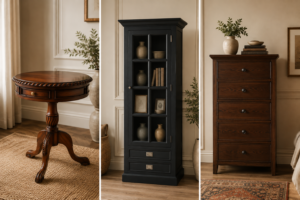
Choosing between a sideboard vs chest of drawers can be confusing because both provide useful storage while adding style to your home. However, they are designed for different purposes and work better in different rooms.
A sideboard is generally wider and offers cupboard storage with a generous surface area, while a chest of drawers uses vertically stacked drawers to organise smaller belongings. Display cabinets are another option if you want to combine storage with a way to showcase decorative items.
Understanding the difference between these furniture pieces can help you choose the right option based on your space, storage needs and interior style.
Sideboard vs Chest of Drawers: What Is the Difference?
The biggest difference between a sideboard vs chest of drawers is their shape, storage configuration and intended use.
A sideboard is usually low and wide. It commonly features cupboards, drawers or a combination of both. Its wide top also provides additional space for lamps, artwork, plants and decorative accessories.
A chest of drawers, on the other hand, is usually taller and narrower. It features multiple drawers stacked vertically, making it particularly useful for organising clothing, accessories and smaller household items.
Both can provide excellent storage, but they create very different visual effects within a room.
What Is a Sideboard?
A sideboard is a versatile storage furniture piece traditionally associated with dining rooms. Today, it can be used in almost any area of the home.
Its low and wide profile makes it particularly useful along a large wall or underneath artwork.
Where Should You Use a Sideboard?
A sideboard works well in:
- Dining rooms
- Living rooms
- Entryways
- Open-plan spaces
- Home offices
In a dining room, a sideboard can store plates, glassware, serving pieces and table linens. In a living room, it can conceal books, electronics, accessories and everyday clutter.
The surface can also become part of your interior styling. A table lamp, framed artwork, vase or decorative object can instantly make a sideboard feel like a design feature rather than simply a storage unit.
When Is a Sideboard the Better Choice?
A sideboard may be the better option if you need wide storage and additional surface space.
For example, if you have an empty wall in your dining room, a sideboard can fill the space without making the room feel overly crowded.
It is also useful when you want some of your belongings hidden behind doors while keeping frequently used items easily accessible.
Another advantage is its versatility. You can move a sideboard from one room to another as your needs change.
A piece that begins as dining room storage could later become a living room console or an entryway storage solution.
What Is a Chest of Drawers?
A chest of drawers is designed around vertically arranged storage.
Instead of cupboards, it normally has several drawers stacked on top of one another. This makes it easier to organise belongings into separate categories.
For example, in a bedroom you could dedicate different drawers to:
- T-shirts
- Underwear
- Accessories
- Bed linens
- Personal items
Because the storage is vertical, a chest of drawers can be particularly useful in rooms where floor space is limited.
When Is a Chest of Drawers the Better Choice?
When comparing a sideboard vs chest of drawers, consider what type of items you need to store.
A chest of drawers is usually better when you have many smaller belongings that need to be separated and organised.
It is especially practical in:
- Bedrooms
- Guest rooms
- Dressing areas
- Children’s rooms
- Home offices
The drawers make it easy to access individual categories without opening a large cupboard.
A tall chest of drawers can also make good use of vertical wall space while keeping the furniture footprint relatively compact.
Sideboard vs Chest of Drawers for the Bedroom
For bedrooms, a chest of drawers is often the more practical choice because drawers are convenient for organising clothing and accessories.
However, a sideboard can also work beautifully in a larger bedroom or dressing area.
For example, a wide sideboard can provide additional storage while creating a surface for a mirror, artwork, lamps or decorative accessories.
If your priority is clothing organisation, choose drawers. If your priority is flexible storage and styling, consider a sideboard.
Sideboard vs Chest of Drawers for the Living Room
In living rooms, a sideboard can often be more versatile.
Its wide profile works well underneath artwork or along a feature wall. It can also provide concealed storage for items that you want to keep out of sight.
A chest of drawers can still work in a living room, particularly if you have limited floor space and need vertical storage.
However, its taller shape may make it feel more visually dominant.
For a spacious living room, a low sideboard can create a balanced and elegant look.
Sideboard vs Chest of Drawers for the Dining Room
A sideboard is particularly well suited to dining rooms.
Its wide surface makes it useful when entertaining because serving dishes, glassware and other dining essentials can be stored nearby.
You can also use the top of the sideboard to create a simple decorative arrangement.
A chest of drawers can technically be used for dining storage, but its vertical design is generally less practical for servingware and larger dining accessories.
If you frequently entertain guests, a sideboard can provide both storage and functionality.
What About a Display Cabinet?
A display cabinet is another option worth considering when choosing furniture for your home.
Unlike a sideboard or chest of drawers, a display cabinet is designed to showcase items rather than completely hide them.
Glass-fronted display cabinets are ideal for displaying:
- Ceramics
- Books
- Glassware
- Collectibles
- Artwork
- Decorative accessories
A display cabinet can add personality to a room because the items inside become part of the overall interior design.
Display Cabinet vs Sideboard
The choice between a display cabinet and sideboard depends largely on how you want your belongings to appear.
Choose a sideboard if you prefer concealed storage and a clean, uncluttered appearance.
Choose a display cabinet if you want your favourite objects to be visible and contribute to the room’s décor.
You can also combine both.
For example, a dining room could feature a sideboard for plates and table linens alongside a display cabinet for glassware or decorative ceramics.
How to Choose the Right Furniture Size
Regardless of whether you choose a sideboard, chest of drawers or display cabinet, size should be one of your first considerations.
Measure the available space before purchasing furniture.
Pay attention to:
- Wall width
- Furniture depth
- Ceiling height
- Walking clearance
- Door and drawer clearance
- Distance from other furniture
A piece may look perfect in a showroom but feel too large once placed inside your home.
For smaller rooms, consider furniture with a slimmer depth or taller profile. For larger rooms, a wide sideboard can help fill an empty wall and create a stronger visual anchor.
Think About Your Interior Style
Function is important, but furniture should also complement the character of your home.
For a traditional interior, consider furniture with:
- Natural wood finishes
- Carved details
- Classic handles
- Curved legs
- Panelled doors
For a more contemporary interior, look for:
- Clean lines
- Minimal detailing
- Simple hardware
- Lighter wood tones
- Streamlined proportions
Solid wood furniture can work particularly well across different interior styles because the natural grain adds warmth and texture.
Why Choose Solid Wood Furniture?
Material can make a significant difference to the appearance and feel of furniture.
Solid wood furniture offers natural grain patterns, texture and colour variations that can give each piece its own character.
Wooden furniture can also bring warmth into interiors dominated by neutral colours, stone, glass or metal.
For homeowners who prefer timeless interiors, solid wood pieces can be a long-term addition rather than something chosen only to follow a short-lived trend.
When selecting wooden furniture, consider the type of wood, finish, craftsmanship and overall construction.
How to Mix Different Furniture Pieces?
Your home does not need to contain furniture from one matching set.
In fact, combining different furniture styles can make an interior feel more personal and sophisticated.
For example, you could pair a traditional wooden chest of drawers with a contemporary sofa or combine a classic sideboard with a modern dining table.
The key is to create visual connections.
Try coordinating furniture through:
Similar Wood Tones
Warm brown woods can create a cohesive and inviting atmosphere, while lighter wood tones can create a brighter appearance.
Complementary Hardware
Matching or complementary handles and knobs can help different furniture pieces feel connected.
Repeated Design Details
Curved legs, framed doors, moulded edges or similar proportions can create consistency without making every piece identical.
Which One Is Best for Your Home?
There is no single answer because each furniture type solves a different problem.
Choose a sideboard if you want versatile storage, a generous surface and a piece that works particularly well in dining and living spaces.
Choose a chest of drawers if you need organised storage for clothing, accessories or smaller belongings and want to maximise vertical space.
Choose a display cabinet if you want to showcase decorative pieces, books, ceramics or collections while keeping them neatly organised.
And if you are furnishing several rooms, combining different types can give your home a more practical and layered look.
Final Thoughts
The right storage furniture should do more than simply give you somewhere to put things. It should make your home easier to organise while adding character to the space.
Whether you prefer the versatility of a sideboard, the practical organisation of a chest of drawers or the visual appeal of a display cabinet, consider your storage needs, room dimensions, interior style and preferred materials before making your choice.
At Home of Homes, you can explore a curated range of furniture designed to combine functionality, craftsmanship and timeless style. From solid wood furniture to classic and contemporary designs, the right piece can become both a practical part of your home and a feature that elevates your interior.
Explore the collection and find furniture that suits your space and lifestyle: https://www.homeofhomes.com.sg/