
Uncategorized
Round vs Rectangular Dining Tables: Which Shape Should You Choose?
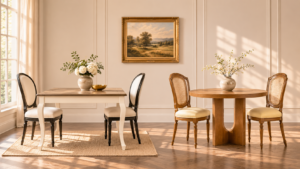
Choosing a dining table involves more than selecting a material or finish. Its shape can influence how your dining room looks, how many people can sit comfortably and how easily everyone can move around the space.
Two of the most popular options are round and rectangular dining tables. Both can work beautifully in different interiors, but each offers distinct advantages depending on your room dimensions, seating requirements and lifestyle.
A rectangular dining table is often a practical choice for larger dining areas and households that regularly host guests. A round dining table, on the other hand, can create a more intimate setting and work particularly well in square rooms or smaller dining spaces.
If you are deciding between round vs rectangular dining tables, understanding their differences will help you choose a design that suits both your home and everyday needs.
1. Round vs Rectangular Dining Tables: Understanding the Differences
Before looking at individual designs, it helps to understand how each shape affects the dining area.
Round Dining Tables
A round dining table has a circular tabletop with no corners. Its shape creates a central gathering point, allowing everyone seated around it to face one another more naturally.
Round tables are particularly suitable for:
- Square dining rooms
- Smaller dining areas
- Open-plan spaces
- Homes where conversation is a priority
- Households that prefer a more relaxed dining arrangement
Depending on the design, round tables can feature a central pedestal base or four separate legs. A pedestal base can make it easier to position chairs around the table without having to work around corner legs.
Rectangular Dining Tables
A rectangular dining table has an elongated tabletop with four defined sides. It is one of the most traditional dining table shapes and is commonly used in both classic and contemporary interiors.
Rectangular tables are particularly suitable for:
- Long or narrow dining rooms
- Larger households
- Families who need additional seating
- Formal dining areas
- Homes that regularly entertain guests
Their shape also makes them easier to position along a wall or align with the length of a room.
Both designs can be practical and visually appealing. The right choice depends on how the dining area is arranged and how you intend to use it.
2. Which Dining Table Shape Is Better for Your Room?
Room dimensions should be one of your first considerations when choosing between round and rectangular dining tables.
The shape of your room can influence how the table fits, how chairs are positioned and how much walking space remains around it.
Round Tables for Square Rooms
A round table often works naturally in a square dining room because its proportions complement the shape of the space.
Without corners, it can create a softer visual arrangement and allow people to move around the table from different directions.
It can also work well in a compact dining area, provided the tabletop diameter is appropriate for the available space.
However, do not assume that every round table is suitable for a small room. A large circular table can still occupy considerable floor space, particularly when several chairs are added.
Rectangular Tables for Long Rooms
A rectangular table generally works well in an elongated dining area because its shape follows the proportions of the room.
Positioning it lengthwise can create a natural arrangement, particularly when the dining area is connected to the kitchen or living room.
It can also provide more flexibility when accommodating additional chairs along the longer sides.
What About Open-Plan Dining Areas?
Both shapes can work in open-plan homes.
A rectangular table can help establish a defined dining zone between the kitchen and living room. Its linear shape can also complement the layout of an open-plan interior.
A round table can create a softer transition between different areas, particularly when the surrounding furniture features curved or organic forms.
Consider the overall layout rather than choosing a shape based on the dining area alone.
3. Consider How Many People You Need to Seat
Seating capacity is another important factor when choosing a dining table.
Think about how many people regularly use the table and whether you frequently host family gatherings or dinner parties.
Round Dining Table Seating
Round tables allow people to sit facing one another, making conversation feel more natural.
However, the available seating depends heavily on the table’s diameter and the size of the chairs.
As a general guide:
- Small round tables: Often suitable for two to four people.
- Medium round tables: Can accommodate approximately four to six people.
- Larger round tables: May accommodate six or more, depending on the diameter and chair dimensions.
Larger round tables can require more floor space than expected, so check the overall dimensions before purchasing.
Rectangular Dining Table Seating
Rectangular tables offer flexibility because additional chairs can be placed along the longer sides.
As a general guide:
- Four-seater tables: Suitable for smaller households or compact dining spaces.
- Six-seater tables: A popular option for family dining.
- Eight-seater tables: Better suited to larger dining rooms and households that entertain regularly.
- Longer tables: Can accommodate additional seating when the room allows.
Actual seating capacity varies according to the table’s length, width, leg placement and chair dimensions.
Always check the recommended seating capacity provided by the retailer rather than relying on the shape alone.
4. Compare Comfort and Ease of Movement
A dining table should allow people to sit comfortably, pull out their chairs and move around the room without difficulty.
The table shape can influence how people interact with the surrounding space.
Movement Around a Round Table
One advantage of a round table is the absence of sharp corners. This can make it easier to navigate certain layouts, particularly when the table is positioned in a central area.
It can also be useful in homes with children because there are no pointed tabletop corners.
However, chairs still need sufficient clearance. A round table surrounded by several large dining chairs may occupy more space than expected.
Movement Around a Rectangular Table
Rectangular tables have defined corners, so their placement needs to be considered carefully.
In a narrow dining room, the corners may affect the walking route around the table.
However, their straight edges can make it easier to position the table against a wall temporarily or align it with other furniture.
How Much Clearance Do You Need?
As a practical starting point, aim to leave around 90 cm between the edge of the dining table and nearby walls or furniture where possible. This provides room to pull out chairs and move around the dining area.
More clearance may be needed in busy walkways or where people regularly pass behind seated guests.
Measure the room with the chairs included, not just the tabletop. This is one of the most common details overlooked when buying a dining table.
5. Which Shape Is Better for Everyday Dining and Entertaining?
Your dining habits can help determine which table shape is more suitable.
Round Tables Encourage Conversation
A round dining table creates a shared central space where everyone is positioned relatively close to one another.
There is no designated head of the table, which can make the arrangement feel more informal and inclusive.
This makes round tables a good option for:
- Everyday family meals
- Smaller dinner gatherings
- Casual conversations
- Homes where dining is a social activity
They are particularly appealing when you prefer a dining arrangement that feels intimate rather than formal.
Rectangular Tables Offer More Seating Flexibility
Rectangular tables are often more practical for households that need different seating arrangements.
They can accommodate additional chairs along the longer sides and are generally easier to use for larger gatherings.
They are also suitable for dining rooms where the table serves multiple purposes, such as family meals, working from home or children’s activities.
If you regularly entertain guests, a rectangular table may provide the flexibility you need.
6. Choose a Material and Finish That Suits Your Interior
Once you have decided on the shape, consider the material and finish.
The tabletop and base influence the overall appearance of the dining table, while the material also affects maintenance and everyday use.
Solid Wood Dining Tables
Solid wood is a popular choice for both round and rectangular dining tables. Its natural grain, texture and colour variations bring warmth to the dining area.
Different wood species create different interior styles:
Mahogany
Mahogany is known for its rich reddish-brown tones and traditional character. It works particularly well in classic and European-inspired dining rooms.
Oak
Oak offers visible grain patterns and versatile natural tones. It can complement both traditional and contemporary interiors.
Teak
Teak has warm golden-brown colouring and distinctive grain. It can create a welcoming dining space when paired with neutral upholstery and natural textures.
Walnut
Walnut is recognised for its deeper brown tones and distinctive grain patterns. It works well in interiors that combine natural materials with understated design.
Solid wood tables can also be maintained or refinished depending on the timber, finish and construction.
Painted and Two-Tone Finishes
A dining table with a painted base and natural wood tabletop can create an interesting contrast.
For example, a cream-painted base paired with a natural wood surface can complement a classic European interior. This combination works particularly well with upholstered dining chairs and neutral wall colours.
Contemporary Wood Finishes
Darker wood tones and clean silhouettes can create a more contemporary appearance.
A rectangular table with a substantial wood base, for example, can become a focal point in a modern dining area without relying on elaborate detailing.
When selecting a finish, consider your existing flooring, wall colours, dining chairs and nearby furniture.
7. Match Your Dining Table with the Right Chairs
Dining chairs play an important role in the overall appearance and comfort of the dining area.
The shape of your table can influence which chair designs work best.
Chairs for Round Dining Tables
Round tables can work well with chairs that have curved backs or softer silhouettes.
For a classic interior, consider upholstered chairs with traditional wooden frames. For a more contemporary look, simpler upholstered designs can provide a balanced contrast.
If your table has a pedestal base, check that the chair legs and seat dimensions fit comfortably around it.
Chairs for Rectangular Dining Tables
Rectangular tables offer more flexibility when combining different chair designs.
You could use matching chairs on all sides for a coordinated look, or introduce armchairs at the two ends to create a more formal arrangement.
Traditional wooden chairs, upholstered dining chairs and designs with cane or woven details can all work depending on the table style.
Check the Chair Height
Regardless of the table shape, make sure the chairs are compatible with the tabletop height.
As a general guide, standard dining tables are often around 74–76 cm high, while dining chairs commonly have seat heights around 45–48 cm.
These are typical measurements rather than universal standards. Always check the actual product dimensions and allow enough space between the chair seat and underside of the tabletop.
Also consider the chair’s overall width, armrests and backrest height. These details affect how many chairs can fit comfortably around the table.
8. Styling Ideas for Round and Rectangular Dining Tables
The shape of your dining table can influence how you style its surface and the surrounding dining area.
How to Style a Round Dining Table
Round tables naturally create a central focal point. A simple arrangement can help emphasise their shape.
Consider:
- A low floral arrangement or vase in the centre
- A decorative bowl or ceramic accessory
- A round or softly shaped pendant light above
- Upholstered chairs in neutral or complementary colours
- A circular rug, if the room dimensions allow
Keep the centrepiece proportionate to the tabletop. A large arrangement can obstruct sightlines and make conversation less comfortable.
How to Style a Rectangular Dining Table
Rectangular tables provide a longer surface that can accommodate a more extended decorative arrangement.
Consider:
- A linear floral arrangement
- A decorative runner
- A series of candleholders
- A low bowl or centrepiece
- A pendant light or chandelier aligned with the table
For everyday use, keep the arrangement relatively simple so there is enough room for dining essentials.
Coordinate the Surrounding Furniture
The dining table should also work with nearby furniture.
A sideboard can provide storage for tableware and create a decorative focal point along a dining room wall. A display cabinet can provide additional storage while showcasing selected pieces.
Consider coordinating the wood tones, hardware finishes and overall design details rather than matching every piece exactly.
9. Common Mistakes to Avoid When Choosing a Dining Table
Before purchasing, consider these common mistakes that can affect both the appearance and functionality of your dining area.
Choosing a table that is too large
A large dining table may look impressive in a showroom but can make your dining room feel crowded. Always measure the available space and account for chairs.
Ignoring the shape of the room
A rectangular table may not be the best option for every square dining room, just as a round table may not make the best use of a long, narrow space.
Consider how the table will fit into the overall layout.
Forgetting about chair dimensions
The tabletop is only part of the equation. Large dining chairs, especially those with armrests, require additional space.
Choosing a design based only on appearance
A dining table should suit your household’s seating requirements and daily routine. Consider comfort, maintenance and functionality alongside its appearance.
Overlooking the table base
The position of the table legs can affect how easily chairs fit underneath. Check whether the base design provides enough legroom for everyone seated around it.
Not considering future needs
If you regularly host guests or expect your household to change, think about whether your chosen table will continue to suit your needs.
Round vs Rectangular Dining Tables: Which One Should You Choose?
The right dining table depends on your room dimensions, seating requirements and preferred dining experience.
Choose a round dining table if:
- Your dining area is square or relatively compact.
- You prefer a more intimate seating arrangement.
- Conversation and shared dining are priorities.
- You want a softer silhouette without tabletop corners.
- The table will be positioned in a central area.
Choose a rectangular dining table if:
- Your dining room is long or narrow.
- You regularly need seating for larger groups.
- You prefer a more traditional dining arrangement.
- You want flexibility to add chairs along the sides.
- You need a table that can align with the length of the room.
There is no universally better option. Both shapes can work beautifully when their dimensions and design suit the surrounding space.
Frequently Asked Questions About Round and Rectangular Dining Tables
1. Is a round dining table better for a small dining room?
A round dining table can work well in a smaller square dining room because it has no corners and allows movement around its perimeter. However, its diameter and the space required for chairs still need to be considered. A compact rectangular table may be more suitable for some narrow rooms.
2. Do round dining tables seat more people than rectangular tables?
Not necessarily. Seating capacity depends on the tabletop dimensions, chair width, base design and available clearance. Rectangular tables can often accommodate more chairs along their longer sides, while round tables provide a shared central seating arrangement.
3. Which dining table shape is better for family gatherings?
Both can work well. Round tables encourage face-to-face conversation and can feel more intimate, while rectangular tables often provide more flexibility for larger groups. Consider the number of people you regularly host.
4. Are round dining tables suitable for narrow rooms?
They can be, but a round table may use the available floor space less efficiently in a long, narrow room. A rectangular table positioned lengthwise may provide a more practical arrangement. Always check the clearance around the chairs.
5. What size dining table should I choose for six people?
The required dimensions depend on the table shape and chair size. A rectangular six-seater generally needs sufficient length for three chairs on each side or an alternative arrangement. A round six-seater needs enough diameter to provide comfortable space for six chairs. Check the manufacturer’s recommended seating capacity before purchasing.
6. Can I use different dining chairs around the same table?
Yes. Different dining chairs can create an interesting and personal arrangement. You can use matching chairs for a more coordinated appearance or combine complementary designs. Keep the seat heights and overall proportions consistent enough to ensure comfortable dining.
7. Which dining table shape is more timeless?
Both round and rectangular dining tables are enduring furniture choices. Their longevity in an interior depends more on the design, materials, proportions and finish than on the shape alone. Solid wood tables with considered detailing can work across different interior styles.
Find a Dining Table That Suits Your Home
Choosing between a round and rectangular dining table is ultimately about finding the right balance between space, comfort and design.
A round table can create a relaxed and intimate dining setting, while a rectangular table offers a more structured arrangement with flexibility for additional seating.
Whichever shape you prefer, pay attention to the dimensions, chair compatibility, materials and surrounding furniture. These details will help you create a dining area that feels comfortable and works well for everyday living.
At Home of Homes, explore dining furniture inspired by classic European design, from traditional tables with elegant detailing to contemporary wooden designs. Pair your chosen table with dining chairs that complement its proportions, finish and character.
Discover our dining collection at https://www.homeofhomes.com.sg/product-category/dining/ or visit our showroom to explore the furniture in person.