
Uncategorized
Why Wooden Furniture Looks Expensive: 7 Key Details
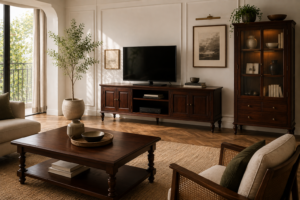
Why Does Some Wooden Furniture Look More Expensive?
Have you ever looked at two wooden furniture pieces and immediately felt that one looked far more luxurious—even when both are made from wood?
The difference is not always about price. Why wooden furniture looks expensive often comes down to a combination of material, proportions, craftsmanship, finish, and small design details. A well-made wooden cabinet can feel refined and timeless, while a poorly proportioned piece can look ordinary even when it uses a similar wood tone.
For homeowners choosing furniture for a dining room, living room, bedroom or study, understanding these details can make it easier to identify pieces that genuinely add character and sophistication to a space.
Here are seven details that can make wooden furniture look and feel more expensive.
1. Natural Wood Grain Adds Character
One of the first things that makes quality wooden furniture stand out is the appearance of the wood itself.
Natural wood has variation in colour, grain direction and texture. These details give a piece a sense of individuality that is difficult to replicate with perfectly uniform surfaces.
Different species naturally have different characteristics, and even pieces made from the same species can vary. The USDA Forest Service’s Wood Handbook notes that wood properties can vary considerably because trees are influenced by factors such as moisture, soil conditions and growing environment.
This natural variation is part of what gives solid wood furniture its visual depth.
Instead of looking completely flat, the surface has subtle changes that become more noticeable as light moves across it.
Look for visible grain rather than an overly uniform surface
A premium-looking wooden piece does not necessarily have perfectly consistent grain.
In fact, natural variation can make furniture more interesting.
Look closely at:
- Grain direction
- Natural colour variation
- Surface texture
- How the grain flows across different sections
- Whether the wood looks visually dimensional rather than flat
These details can make a simple table, cabinet or sideboard feel much more substantial.
2. Good Proportions Make Furniture Look Refined
Another major factor behind why wooden furniture looks expensive is proportion.
A piece can use beautiful wood but still look inexpensive if its dimensions feel awkward.
Think about the relationship between:
- The thickness of the tabletop
- The size of the legs
- The height of the furniture
- The width of drawers
- The spacing between panels
- The overall scale of the piece
Well-designed furniture usually has a sense of balance.
For example, a dining table with a substantial top and appropriately proportioned legs can immediately feel more architectural and sophisticated. Similarly, a cabinet with carefully balanced doors, drawers and framing tends to look more considered.
This is one reason classic wooden furniture can remain visually appealing for decades. Its proportions are designed to work beyond a particular trend.
Bigger does not always mean more luxurious
A common mistake is assuming that heavier furniture automatically looks more expensive.
It doesn’t.
Furniture that is excessively bulky can make a room feel crowded. Premium design is often about finding the right balance between visual weight and negative space.
The result is furniture that feels substantial without overwhelming the room.
3. Craftsmanship Shows in the Small Details
Luxury is often visible in places that people don’t immediately notice.
Look at the corners, joints, edges, drawer fronts and hardware.
Small construction details can significantly influence how a piece feels.
For example, consider:
- Smoothly finished edges
- Consistent gaps between drawers
- Well-aligned doors
- Carefully fitted joints
- Solid-looking handles
- Clean transitions between different components
- Even and consistent finishing
These details communicate that the furniture has been carefully designed and constructed rather than simply assembled.
This is particularly important with wooden furniture because the material itself becomes part of the design.
A beautiful piece of timber deserves a construction approach that allows its character to be appreciated.
The USDA’s Wood Handbook covers not only the physical and mechanical properties of wood, but also topics such as drying, dimensional changes, adhesives and finishing—factors that matter when working with wood as a furniture material.
4. The Finish Should Enhance the Wood, Not Hide It
The finish of wooden furniture can completely change how it looks.
A good finish should complement the character of the wood rather than make it look artificially uniform.
Depending on the design, a warmer finish can bring out the depth of traditional timber, while a lighter or more natural finish can create a contemporary appearance.
This is particularly noticeable with darker woods such as mahogany.
Mahogany furniture can have a rich reddish-brown appearance that naturally creates a sense of warmth and formality. When the finish allows the grain and colour variation to remain visible, the furniture can become a strong visual feature within the room.
The right finish depends on the style
For a classic interior, deeper wood tones and richer finishes can create a traditional, elegant atmosphere.
For contemporary spaces, a more natural or lighter finish may allow the grain to remain visible while keeping the overall room feeling lighter.
The key is not simply choosing the darkest or glossiest finish.
It’s choosing a finish that works with the furniture’s design and the rest of the room.
5. Hardware Can Change the Entire Look
Handles, knobs, hinges and other hardware may seem like minor details, but they can have a surprisingly large impact.
Compare a wooden cabinet with:
- Thin, generic-looking hardware
- Carefully selected metal handles
- Traditional brass-style details
- Minimalist concealed handles
Each option creates a completely different impression.
Traditional hardware can make solid wood furniture feel more heritage-inspired, while understated hardware can make the same material feel contemporary.
The important thing is consistency.
Hardware should feel like part of the furniture’s design rather than something added as an afterthought.
This is especially important for pieces such as cabinets, sideboards, chests of drawers and display units, where handles and fittings are highly visible.
6. Details Around the Edges Create a More Premium Appearance
One of the easiest details to overlook is the edge treatment.
Straight, sharp edges can create a clean contemporary appearance. Rounded edges, moulding, bevels or decorative profiles can introduce more visual depth.
Traditional furniture often uses more detailed edge treatments, carved elements or shaped legs. Contemporary solid wood furniture may instead rely on precise edges and clean lines.
Neither approach is automatically more expensive-looking.
What matters is execution.
When the detailing is intentional and proportionate to the overall design, it can make furniture feel considerably more sophisticated.
This is why two pieces with similar dimensions can have completely different visual impact.
7. The Furniture Needs to Feel Appropriate for Its Purpose
A final factor behind why wooden furniture looks expensive is functionality.
Premium furniture usually looks as though it was designed around the way people actually use it.
A dining table should provide comfortable space for dining.
A sideboard should provide practical storage while maintaining a balanced silhouette.
A display cabinet should showcase objects without making the room feel cluttered.
A chest of drawers should offer useful storage while remaining easy to access.
When function and aesthetics work together, the furniture feels intentional.
This is often what separates timeless furniture from pieces that simply follow a trend.
Solid Wood vs. Furniture That Only Looks Like Wood
Material is another important consideration when judging the quality of wooden furniture.
Not every piece with a wood appearance is made in the same way.
Solid wood furniture is made primarily from natural wood, while engineered wood and wood-based panels can also be used to create furniture with wood finishes or veneers. These materials can have legitimate advantages depending on the design and application, so the important thing is understanding what you’re actually buying.
When shopping, don’t judge furniture solely by its colour or surface appearance.
Ask:
What material is used?
What type of wood is it?
How is it constructed?
How has it been finished?
What details show the quality of the craftsmanship?
These questions can tell you much more than simply looking at the price tag.
Why Wood Species Matter
Different wood species have different colours, grain patterns, densities and working characteristics.
This means the same furniture design can look completely different depending on the wood used.
For example, mahogany is often associated with warm reddish-brown tones and traditional furniture styles. Lighter woods can create a softer, more contemporary atmosphere, while darker finishes can add depth and formality.
The USDA Forest Service provides extensive information on commercially important wood species and their physical and mechanical characteristics, highlighting just how much natural wood can vary by species.
So when comparing furniture, don’t only ask whether it is “wooden.”
The type of wood matters.
Does Expensive-Looking Furniture Have to Be Expensive?
Not necessarily.
A sophisticated-looking interior doesn’t require every item to be extremely expensive.
Instead, focus on selecting a few pieces with strong visual qualities.
For example, a room can feel more elevated with:
- One well-designed solid wood dining table
- A carefully proportioned sideboard
- A statement wooden cabinet
- Quality lighting
- Neutral upholstery
- Simple decorative accessories
- Enough empty space around major furniture pieces
The goal is to create visual hierarchy.
When every piece tries to become the focal point, the room can actually feel less luxurious.
Sometimes, one beautifully crafted wooden piece can have more impact than several average pieces competing for attention.
How to Make Wooden Furniture Look More Luxurious at Home
Even a beautiful piece of furniture can lose its impact if the surrounding room is too cluttered.
Try these simple styling principles:
Give large wooden pieces enough breathing room
Avoid pushing every piece directly against another.
Negative space allows the shape and material of the furniture to become more noticeable.
Mix textures
Pair wood with linen, cotton, leather, stone, glass or metal.
The contrast prevents the room from becoming visually flat.
Don’t match every wood tone perfectly
A room can look more natural when different wood tones are carefully layered rather than forced into an identical colour.
The key is to maintain some connection between the tones through warmth, finish or style.
Keep accessories intentional
Instead of filling every surface, choose a few objects that complement the furniture.
A ceramic vase, artwork, books or a simple lamp can often be enough.
Let the furniture be the feature
If you have a beautifully grained solid wood table or cabinet, you don’t need excessive decoration around it.
Sometimes simplicity makes quality more noticeable.
What to Look for When Buying Wooden Furniture
Before buying a wooden furniture piece, take a few minutes to inspect it closely.
1. Look at the material.
Find out whether it is solid wood, veneer, engineered wood or a combination.
2. Examine the grain.
Natural grain and variation can add depth and character.
3. Check the proportions.
Does the furniture feel balanced from every angle?
4. Inspect the craftsmanship.
Look at corners, joints, drawers, doors and edges.
5. Consider the finish.
Does it enhance the natural character of the wood?
6. Look at the hardware.
Handles and fittings should complement the design.
7. Think about longevity.
Choose a style that you can imagine living with for years rather than something that only looks appealing because it is currently trending.
For buyers who are also concerned about responsible sourcing, certification can be another factor to consider. The Forest Stewardship Council explains that FSC certification can help verify responsible sourcing of forest-based materials, including furniture.
The Real Secret Behind Expensive-Looking Wooden Furniture
So, why wooden furniture looks expensive isn’t simply because it uses a particular type of wood or carries a higher price tag.
It is the combination of material, grain, proportion, craftsmanship, finishing, hardware and thoughtful design.
A well-made wooden piece has a presence that goes beyond decoration. It can add warmth, texture and character to a room while remaining functional enough for everyday life.
That’s also why solid wood furniture can be such a worthwhile addition to a home. When the design is timeless and the craftsmanship is carefully considered, the piece doesn’t have to follow every new interior trend to remain beautiful.
Discover Timeless Wooden Furniture at Home of Homes
At Home of Homes, wooden furniture is selected for homes that value warmth, character and timeless design. From solid wood pieces to classic and contemporary collections, the right furniture can bring both function and personality into your space.
Explore the collection and find pieces designed to become part of your home for years to come.
Home of Homes:
https://www.homeofhomes.com.sg/